Today's
EarthStation1.com 15% Off Commemorative Memorial Title: This Is
The Army 1943 Ronald Reagan Irving Berlin DVD, MP4, USB Drive
Today, May 30, 2026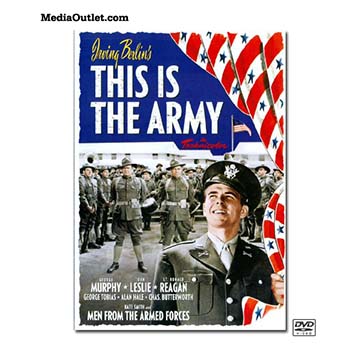
May 30: International Day Of The Potato:
-- Let's dive into a celebration about a humble hero with an
extraordinary impact - the potato! Picture fields of golden
potatoes, from the sun-kissed slopes of the Andes to the lush,
green farmlands worldwide. The day represents a global shout-out
to the mighty spud, highlighting its role in feeding billions,
supporting farmers, and boosting sustainability. This day
highlights the potato's essential role in tackling food
insecurity, improving nutrition, and supporting livelihoods around
the globe. The United Nations, with the support of the Food and
Agriculture Organization (FAO), established this day to draw
attention to the potato's benefits, which range from its
nutritional value to its economic, environmental, and cultural
significance. The chosen date, May 30, aligns with the Peruvian
National Potato Day, reinforcing the global significance of this
crop. The celebration of International Day Of The Potato
underscores the potato's journey from its origins in the South
American Andes to becoming a staple food consumed by billions
worldwide. This day not only celebrates the potato's nutritional
and cultural value but also emphasizes its importance in providing
food security and supporting economic development. With over 5,000
varieties, the potato is adaptable to various climates, making it
a key crop in efforts to combat hunger and malnutrition. The
reasons behind marking this day are multi-fold. It aims to raise
awareness about the potato's role in addressing global challenges
such as poverty, food scarcity, and environmental threats. The
celebration brings to light the crop's low greenhouse gas
emissions, showcasing its environmental benefits. Additionally,
the day recognizes the potato's contribution to employment and
income growth, highlighting the need for further action to
maximize its potential in the global fight against hunger and
malnutrition. By celebrating International Day Of The Potato, we
acknowledge the crop's significance and the necessity of promoting
sustainable agricultural practices to ensure its continued
contribution to global food security. The story of International
Potato Day is a tale of global collaboration and recognition of
this vegetable with a profound impact. On December 16, 2023, the
United Nations made a historic move by unanimously adopting a
resolution to declare May 30 as International Potato Day. This
decision was warmly embraced by the Food and Agriculture
Organization (FAO). It marked a significant step in acknowledging
the potato's crucial role in combating food insecurity and
malnutrition worldwide. The push for establishing this day was led
by Peru, which is home to thousands of potato varieties, and the
International Potato Center (CIP). The resolution, stemming from
an FAO Conference Resolution on July 7, 2023, was aimed at shining
a spotlight on the potato's critical contributions to global
agriculture, economic development, food security, and nutrition.
The initiative builds on the momentum of the International Year of
the Potato, celebrated in 2008. It highlights the need to
emphasize the potato's significant role in addressing food
insecurity, poverty, and environmental threats. This day is not
just about celebrating the potato but also about raising awareness
of its benefits. These range from its nutritional value to its
economic and environmental advantages. It acknowledges the
potato's adaptability, low greenhouse gas emissions, and its role
in providing accessible and nutritious food. This celebration also
shows the importance of diverse potato varieties and the need for
continued genetic improvement to adapt to changing environmental
conditions. The journey to the first International Potato Day
involved extensive lobbying and collaboration. Members of the
World Potato Congress (WPC) and various countries rallied support
for the proposal. It demonstrated the potato's value in
eradicating poverty, improving food security, and providing
healthy food to millions. On Sale @ 15% Off Discount Till Midnight
PT!
https://store.earthstation1.com/this-is-the-army-1943-dvd-ronald-reagan-irving-berlin-wwii-m1943.html
Today's
EarthStation1.com 15% Off Commemorative Memorial Title: Super
Sense Animal Perception/Plant Adaptation TV Series DVD, MP4, USB
Today, May 30, 2026
May 30: International Hug Your Cat Day:
-- An opportunity to lavish your cat with hugs and pamper it as it
deserves. Of course, you should already be doing this, but
International Hug Your Cat Day is the one day dedicated
specifically to doing so. The 'domestic cat' is a species in the
Felidae family that is often distinguished from the wild members
of the larger cat family. Cats are classified as either house
cats, farm cats, or feral cats, which roam freely and avoid human
contact. Domestic cats are of great importance and value to humans
for companionship and their ability to kill rodents. Cats can hear
sounds that are too faint or occur at high frequencies beyond
human? hearing, such as those made by mice and other such small
mammals. Cats were revered by the ancient Egyptians, and the
Egyptian goddess Bastet is frequently depicted as a cat, sometimes
in the fighting stance of a lioness. According to Herodotus, a
Greek historian, killing a cat was forbidden in ancient times, and
whenever a household cat died of natural causes, the entire
household mourned the death of the cat and shaved their eyebrows
as if it were one of them. When a cat died in a Greek family, the
dead cat was taken to the sacred city of Bubastis, where it was
embalmed and buried in sacred repositories. Herodotus was taken
aback by the sight of domestic cats in Egypt, as he had only ever
seen wild cats. Keeping cats as pets shares a similar tradition
with the ancient Greeks and Romans, who kept weasels as pets
because they were considered best for ?killing rodents. The
earliest clear evidence of Greek domestic cats can be found in two
coins from Magna Graecia dating from the middle of the fifth
century B.C. The coins depict Iokastis and Phalanthus, the
legendary founders of Rhegion and Taras respectively, playing with
their pet cats. Back in the day, the Greek word for 'cat' was ?
'ailouros,' which meant 'having the waving tail.' Apart from that,
cats are rarely mentioned in ancient Greek literature. In his book
"History of Animals," Aristotle stated that "female
cats are naturally lecherous." The Greeks later syncretized
their own goddess Artemis with the Egyptian goddess Bastet,
appropriating Bastet's associations with cats and attributing them
to Artemis. When the deities flee to Egypt in animal forms in
Ovid's "Metamorphoses," the goddess Diana allegedly
transforms into a cat. On Sale @ 15% Off Discount Till Midnight
PT!
https://store.earthstation1.com/super-sense--animal-perception-tv-series-dvd-mp4-download-usb-driv4.html
Today's
EarthStation1.com 15% Off Commemorative Memorial Title: The
Mysterious Mr Tesla Documentary On Nikola Tesla DVD, Download, USB
Today, May 30, 2026
May 30: National Creativity Day: -- A day
for you to unleash your imagination! Many things in our lives
(except nature, of course) was spawned out of someone's
imagination. Artists, writers, sculptors, filmmakers, chefs,
landscapers, architects, and many more - this special day was
founded to honor and celebrate everyone who creates new things
each day, someone just like you! People have differing opinions
about the history of creativity. Some believe it began in the
prehistoric ages when early humans used leaves to cover themselves
and developed tools for hunting. Others believe it originated with
the Australian Aborigines. They had moved from India to Australia,
inventing an incredibly creative hunting tool, the boomerang, in
the process. People also tend to think creativity originated in
ancient Egypt, Mexico, Asia. The pyramids, geometry, astronomy,
and advancements in production and science are all examples of a
creative bent. The term 'creativity' itself has changed over the
years, adapting to the way different cultures perceive it. The
ancient Greeks preferred to avoid freedom of action in favor of
following the rules when it came to creating art, a practice
creative people do not prefer in today's world. The Greeks also
had no specific term corresponding to 'creativity', but there was
one exception - the word 'poiein' ( which means 'to make') applied
specifically to 'poiesis' ('poetry') and the 'poietes' ('poet' or
'maker'). After the Greek civilization, Romans developed a new
vocabulary, literature, art, and, most famously, sculptures.
Medieval Christianity gave a new meaning to the term 'creativity.'
The Latin 'creatio' referred to God's act of 'creatio ex nihilo'
('creation from nothing'). Later changes in this definition
allowed the skill of creativity to be independent - it was no
longer simply associated with art. The greatest period of
creativity in history is said to be the period of the Renaissance,
where everyone sought to express themselves, and creativity
bloomed in every aspect of life, even in politics, economy,
society, art, philosophy, science, and education. The last decade
has been full of revolution, with science taking an interest in
the skill of creativity. To encourage us to nurture our creativity
and thus inspire others to do the same, film producer and the
president of ScreenwritingU, Hal Croasmun, together with
ScreenwritingU, founded National Creativity Day. On Sale @ 15% Off
Discount Till Midnight PT!
https://store.earthstation1.com/the-mysterious-mr-tesla-dvd-nikola-tesla-documentary.html
Today's
EarthStation1.com 15% Off Commemorative Memorial Title: Joan Of
Arc Biography + You Are There Bonus MP4 Video Download DVD
Today, May 30, 2026
May 30, 1431: The Roman Catholic Church:
Feast Day: Joan Of Arc: #DOTD: #RIP: In Rouen, France, the
19-year-old Joan Of Arc (b. January 6, 1412 [Traditional; Epiphany
Holiday]) #dies in Rouen, Normandy, then under English rule,
executed by burning at the stake by an English-dominated tribunal
on the charge, of all things, of cross-dressing. A monument in
Rouen is inscribed with the words of Andre Malraux: "O
Jeanne, without sepulchre, without portrait, you know that the
tomb of heroes is the heart of the living." Another monument
to her stands in north side of Notre Dame Cathedral Of Paris. Joan
Of Arc was born to a propertied peasant family at Domremy in
northeast France. Nicknamed "The Maid Of Orleans", she
is considered a heroine of France for her role during the
Lancastrian phase of the Hundred Years' War and was canonized as a
Roman Catholic saint. She was forced by her interrogators to sign
an abjuration (a solemn repudiation, abandonment, or renunciation
by or upon an oath) of the charge of heresy, which created a
problem. Heresy was a capital crime only for a repeat offense, so
in order to justify her execution, a repeat offense of
"cross-dressing" was arranged by the court, according to
the eyewitnesses. According to the later descriptions of some of
the tribunal members, she had previously been wearing male (i.e.
military) clothing in prison because it gave her the ability to
fasten her hosen, boots and tunic together into one piece, which
deterred rape by making it difficult to pull her hosen off. She
was evidently afraid to give up this outfit even temporarily
because it was likely to be confiscated by the judge and she would
thereby be left without protection. A woman's dress offered no
such protection. A few days after her abjuration, when she was
forced to wear a dress, she told a tribunal member that "a
great English lord had entered her prison and tried to take her by
force.". She resumed male attire either as a defense against
molestation or, in the testimony of Jean Massieu, because her
dress had been taken by the guards and she was left with nothing
else to wear. Her resumption of male military clothing was labeled
a relapse into heresy for cross-dressing, although this would
later be disputed by the inquisitor who presided over the appeals
court that examined the case after the war. Medieval Catholic
doctrine held that cross-dressing should be evaluated based on
context, as stated in the Summa Theologica by St. Thomas Aquinas,
which says that necessity would be a permissible reason for
cross-dressing.This would include the use of clothing as
protection against rape if the clothing would offer protection. In
terms of doctrine, she had been justified in disguising herself as
a pageboy during her journey through enemy territory, and she was
justified in wearing armor during battle and protective clothing
in camp and then in prison. The Chronique de la Pucelle states
that it deterred molestation while she was camped in the field.
When her soldiers' clothing wasn't needed while on campaign, she
was said to have gone back to wearing a dress.[89] Clergy who
later testified at the posthumous appellate trial affirmed that
she continued to wear male clothing in prison to deter molestation
and rape. Joan referred the court to the Poitiers inquiry when
questioned on the matter. The Poitiers record no longer survives,
but circumstances indicate the Poitiers clerics had approved her
practice. She also kept her hair cut short through her military
campaigns and while in prison. Her supporters, such as the
theologian Jean Gerson, defended her hairstyle for practical
reasons, as did Inquisitor Brehal later during the appellate
trial. Nonetheless, at the trial in 1431 she was condemned and
sentenced to die. Boyd described Joan's trial as so "unfair"
that the trial transcripts were later used as evidence for
canonizing her in the 20th century. Eyewitnesses described the
scene of the execution by burning on May 30, 1431. Tied to a tall
pillar at the Vieux-Marche in Rouen, she asked two of the clergy,
Fr. Martin Ladvenu and Fr. Isambart de la Pierre, to hold a
crucifix before her. An English soldier also constructed a small
cross that she put in the front of her dress. After she died, the
English raked back the coals to expose her charred body so that no
one could claim she had escaped alive. They then burned the body
twice more, to reduce it to ashes and prevent any collection of
relics, and cast her remains into the Seine River. The
executioner, Geoffroy Therage, later stated that he "greatly
feared to be damned." In 1456, an inquisitorial court
reinvestigated Joan's trial and overturned the verdict, declaring
that it was tainted by deceit and procedural errors. Joan has been
revered as a martyr, and viewed as an obedient daughter of the
Roman Catholic Church, an early feminist, and a symbol of freedom
and independence. After the French Revolution, she became a
national symbol of France. In 1920, Joan of Arc was canonized by
the Roman Catholic Church and, two years later, was declared one
of the patron saints of France. She is portrayed in numerous
cultural works, including literature, paintings, sculptures, and
music. Joan Of Arc was born to a propertied peasant family at
Domremy in northeast France. Her birthday is sometimes given as,
and celebrated on, January 6, based on a letter by Perceval de
Boulainvilliers, a councillor of French King Charles VII, stating
that Joan was born on the feast day of Epiphany, but his letter is
filled with literary tropes that make it questionable as a
statement of fact. There is no other evidence of her being born on
Epiphany. There is no standard spelling of Joan Of Arc's before
the sixteenth century; her name was written in a variety of ways.
Her last name was usually written as "Darc" without an
apostrophe, but there are variants such as "Tarc",
"Dart" or "Day". Her father's name was written
as "Tart" at her trial. She was called "Jeanne d'Ay
de Domremy" in Charles VII's 1429 letter granting her a coat
of arms. Joan may never have heard herself called "Jeanne
d'Arc". The first written record of her being called by this
name is in 1455, 24 years after her death. She was not taught to
read and write in her childhood, and so dictated her letters. She
may have later learned to sign her name, as some of her letters
are signed, and she may even have learned to read. Joan referred
to herself in the letters as "Jeanne la Pucelle" (Joan
the Maiden) or as "la Pucelle" (the Maiden), emphasizing
her virginity, and she signed "Jehanne". In the
sixteenth century, she became known as the "Maid Of Orleans".
In 1428, she requested to be taken to Charles, later testifying
that she was guided by visions from the archangel Michael, Saint
Margaret, and Saint Catherine to help him save France from English
domination. Convinced of her devotion and purity, Charles sent
Joan, who was about seventeen years old, to the Siege Of Orleans
as part of a relief army. She arrived at the city in April 1429,
wielding her banner and bringing hope to the demoralized French
army. Nine days after her arrival, the English abandoned the
siege. Joan encouraged the French to aggressively pursue the
English during the Loire Campaign, which culminated in another
decisive victory at Patay, opening the way for the French army to
advance on Reims unopposed, where Charles was crowned as the King
Of France with Joan at his side. These victories boosted French
morale, paving the way for their final triumph in the Hundred
Years' War several decades later. After Charles's coronation, Joan
participated in the unsuccessful siege of Paris in September 1429
and the failed siege of La Charite in November. Her role in these
defeats reduced the court's faith in her. In early 1430, Joan
organized a company of volunteers to relieve Compiegne, which had
been besieged by the Burgundians, who were French allies of the
English. She was captured by Burgundian troops on May 23. After
trying unsuccessfully to escape, she was handed to the English in
November. She was put on trial by Bishop Pierre Cauchon on
accusations of heresy, which included blaspheming by wearing men's
clothes, acting upon visions that were demonic, and refusing to
submit her words and deeds to the judgment of the church. On Sale
@ 15% Off Discount Till Midnight PT!
https://store.earthstation1.com/joan-of-arc-documentary-mp4-video-download-dv4.html
Today's
EarthStation1.com 15% Off Commemorative Memorial Title: The
Western Tradition TV Series DVD, MP4 Video Download, USB Drive
Today, May 30, 2026
May 30, 1381: The Middle Ages (The
Medieval Period, The Mediaeval Period): Peasant Revolts: Medieval
And Early Modern European Peasant Wars: The Peasants' Revolt (Wat
Tyler's Rebellion, The Great Rising): -- The socio-economic and
political tensions generated by the Black Death in the 1340s, the
high taxes resulting from the conflict with France during the
Hundred Years' War, instability within the local leadership of
London, and a host of other causes, sparks The Peasants' Revolt, a
major uprising across large parts of England. The final trigger
for the revolt was the intervention of a royal official, John
Bampton, in Essex on May 30, 1381, when his attempts to collect
unpaid poll taxes in Brentwood ended in a violent confrontation,
which rapidly spread across the south-east of the country. A wide
spectrum of rural society, including many local artisans and
village officials, rose up in protest, burning court records and
opening the local gaols. The rebels sought a reduction in
taxation, an end to the system of unfree labour known as serfdom,
and the removal of the King's senior officials and law courts.
Inspired by the sermons of the radical cleric John Ball and led by
Wat Tyler, a contingent of Kentish rebels advanced on London. They
were met at Blackheath by representatives of the royal government,
who unsuccessfully attempted to persuade them to return home. King
Richard II, then aged 14, retreated to the safety of the Tower of
London, but most of the royal forces were abroad or in northern
England. On June 13, the rebels entered London and, joined by many
local townsfolk, attacked the gaols, destroyed the Savoy Palace,
set fire to law books and buildings in the Temple, and killed
anyone associated with the royal government. The following day,
Richard met the rebels at Mile End and acceded to most of their
demands, including the abolition of serfdom. Meanwhile, rebels
entered the Tower of London, killing the Lord Chancellor and the
Lord High Treasurer, whom they found inside. On June 15, Richard
left the city to meet Tyler and the rebels at Smithfield. Violence
broke out, and Richard's party killed Tyler. Richard defused the
tense situation long enough for London's mayor, William Walworth,
to gather a militia from the city and disperse the rebel forces.
Richard immediately began to re-establish order in London and
rescinded his previous grants to the rebels. The revolt had also
spread into East Anglia, where the University of Cambridge was
attacked and many royal officials were killed. Unrest continued
until the intervention of Henry Despenser, who defeated a rebel
army at the Battle of North Walsham on June 25 or 26. Troubles
extended north to York, Beverley and Scarborough, and as far west
as Bridgwater in Somerset. Richard mobilised 4,000 soldiers to
restore order. Most of the rebel leaders were tracked down and
executed; by November, at least 1,500 rebels had been killed. The
Peasants' Revolt has been widely studied by academics. Late
19th-century historians used a range of sources from contemporary
chroniclers to assemble an account of the uprising, and these were
supplemented in the 20th century by research using court records
and local archives. Interpretations of the revolt have shifted
over the years. It was once seen as a defining moment in English
history, but modern academics are less certain of its impact on
subsequent social and economic history. The revolt heavily
influenced the course of the Hundred Years' War, by deterring
later Parliaments from raising additional taxes to pay for
military campaigns in France. The revolt has been widely used in
socialist literature, including by the author William Morris, and
remains a potent political symbol for the political left,
informing the arguments surrounding the introduction of the
Community Charge in the United Kingdom during the 1980s. On Sale @
15% Off Discount Till Midnight PT!
https://store.earthstation1.com/the-western-tradition-dvd-set-all-52-shows-13-d5213.html
Today's
EarthStation1.com 15% Off Commemorative Memorial Title: Triumph Of
The West 13 Part TV Documentary Series DVD, Download, USB
Today, May 30, 2026
May 30, 1536: The English Monarchy (The
Monarchy Of The Kingdom Of England): Royal Weddings: -- King Henry
VIII Of England marries Jane Seymour, a lady-in-waiting to his
first two wives. Jane Seymour, English wife of Henry VIII Of
England (c. 1508 - October 24, 1537) was Queen Of England from
1536 to 1537 as the third wife of King Henry VIII. She succeeded
Anne Boleyn as queen consort following the latter's execution in
May 1536. She died of postnatal complications less than two weeks
after the birth of her only child, a son who became King Edward
VI. Edward VI was King of England and Ireland from January 28,
1547 until his death. He was England's first monarch to be raised
as a Protestant, and was crowned on February 20 at the age of
nine. She was the only one of Henry' wives to receive a queen's
funeral, and his only consort to be buried beside him in St
George' Chapel at Windsor Castle. On Sale @ 15% Off Discount Till
Midnight PT!
https://store.earthstation1.com/triumph-of-the-west-tv-series-5-dual-layer-dvds-all-13-sh513.html
Today's
EarthStation1.com 15% Off Commemorative Memorial Title: Armada:
Spanish Armada TV Series + Bonus MP4 Video Download DVD
Today, May 30, 2026
May 30, 1588: The European Wars Of
Religion: The Eighty Years' War (The Dutch Revolt): The
Anglo-Spanish Wars: The Anglo-Spanish War (1585-1604): The Spanish
Armada (The Invincible Armada, The Enterprise Of England [Spanish:
Grande Y Felicisima Armada, "Great And Most Fortunate
Navy"]): -- The last ship of the Spanish Armada sets sail
from Lisbon heading for the English Channel. The Spanish Armada,
with 130 ships and 30,000 men, sets sail on May 28, 1588 from
Lisbon, Portugal, heading for the English Channel; it will take
until May 30 for all ships to leave port. The Spanish Armada
(Spanish: Grande y Felicisima Armada, literally "Great and
Most Fortunate Navy") was a Spanish fleet of 130 ships that
sailed from A Coruna in late May 1588, under the command of the
Duke of Medina Sidonia, with the purpose of escorting an army from
Flanders to invade England. The Spanish Armada naval expedition
was organized by the devout Catholic Philip II, who was King of
Spain (1556-98), King of Portugal (1581-98, as Philip I, Filipe
I), King of Naples and Sicily (both from 1554), and "jure
uxoris" (Latin for "by right of (his) wife"), King
of England and Ireland (during his marriage to Queen Mary I from
1554-58); he was also Duke of Milan, and from 1555 he was lord of
the Seventeen Provinces of the Netherlands. The strategic aim of
the armada was to overthrow Queen Elizabeth I and her
establishment of Protestantism in England, with the expectation
that this would put a stop to English interference in the Spanish
Netherlands and to the harm caused to Spanish interests by English
and Dutch privateering. The Armada chose not to attack the English
fleet at Plymouth, then failed to establish a temporary anchorage
in the Solent, after one Spanish ship had been captured by Francis
Drake in the English Channel. The Armada finally dropped anchor
off Calais. While awaiting communications from the Duke of Parma's
army, the Armada was scattered by an English fireship attack. In
the ensuing Battle Of Gravelines the Spanish fleet was damaged and
forced to abandon its rendezvous with Parma's army, who were
blockaded in harbour by Dutch flyboats. The Armada managed to
regroup and, driven by southwest winds, withdrew north, with the
English fleet harrying it up the east coast of England. The
commander ordered a return to Spain, but the Armada was disrupted
during severe storms in the North Atlantic and a large number of
the vessels were wrecked on the coasts of Scotland and Ireland. Of
the initial 130 ships over a third failed to return. The
expedition was the largest engagement of the undeclared
Anglo-Spanish War (1585-1604). The following year, England
organised a similar large-scale campaign against Spain, the
Drake-Norris Expedition or "counter-Armada of 1589",
which was also unsuccessful. On Sale @ 15% Off Discount Till
Midnight PT!
https://store.earthstation1.com/armada-dvd-spanish-armada-tv-series-all-3-episode3.html
Today's
EarthStation1.com 15% Off Commemorative Memorial Title: Napoleon
(1955) Raymond Pellagrin Orson Welles DVD, Download, USB
Today, May 30, 2026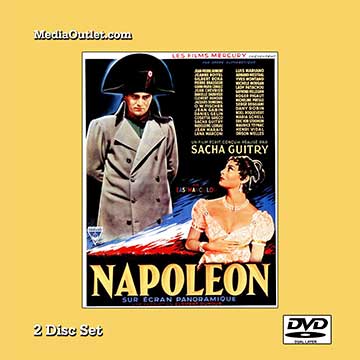
May 30, 1814: The Age Of Enlightenment
(The Enlightenment, The Age Of Reason): The Age Of Revolution: The
Atlantic Revolutions: The French Revolution: The French
Revolutionary And Napoleonic Wars (The Great French War) (The
French Revolutionary Wars, The Napoleonic Wars): The Napoleonic
Wars: The Coalition Wars: The War Of The Sixth Coalition: The
Battle Of Paris (The Storming Of Paris): The Treaties Of Paris:
The Treaty Of Paris (1814) (The First Treaty Of Paris): -- The
Battle Of Paris (March 30-31, 1814) ses the Allied forces of
Russia, Austria, Prussia, and Wurttemberg attack Paris defended by
troops of the First French Empire under Joseph Bonaparte. The
French soldiers put up a stout resistance at the capital's eastern
suburbs on March 30, but were steadily driven back by the
overwhelmingly superior Allied forces. Faced with a hopeless
situation, Marshals Auguste de Marmont and Edouard Mortier agreed
to a ceasefire with the Allies in the late afternoon. Later that
day, The First Treaty Of Paris is signed, ending the war between
France and The Sixth Coalition. This was following an armistice
signed on April 23 between Charles, Count of Artois, and the
allies. The French evacuated Paris on March 31 according to the
terms of the convention reached with the Allied leaders Tsar
Alexander I of Russia, King Frederick William III of Prussia, and
Austrian Field Marshal Karl Philipp, Prince of Schwarzenberg. This
defeat marked the end the War of the Sixth Coalition and soon
forced Emperor Napoleon to abdicate and go into exile. The Treaty
Of Paris returned the French frontiers to their 1792 House Of
Bourbon extent, restored The House Of Bourbon to power, and
restored territories to other nations. It is sometimes called the
First Peace of Paris, as another one followed in 1815, The Treaty
Of Paris (1815), also known as The Second Treaty Of Paris. On Sale
@ 15% Off Discount Till Midnight PT!
https://store.earthstation1.com/napoleon-1955-dvd-raymond-pellagrin-orson-welles-2-19552.html
Today's
EarthStation1.com 15% Off Commemorative Memorial Title: La Belle
Epoque 1890-1914 Western Haute Culture MP4 Download Or DVD
Today, May 30, 2026
May 30, 1846 [O.S. May 18, 1846]: #BOTD:
#HBD! Peter Carl Faberge, also known as Charles Faberge Russian
goldsmith and jeweler, best known for creating Faberge eggs made
in the style of genuine Easter eggs, but using precious metals and
gemstones rather than more mundane materials (d. September 24,
1920) is #born Peter Carl Gustavovich Faberge in Saint Petersburg,
Russia, into the family of the Baltic German jeweller of Huguenot
descent, Gustav Faberge, the founder of the jewelry firm House of
Faberge in Saint Petersburg, Russia, and his wife Charlotte
Jungstedt, the daughter of Danish painter Karl Jungstedt; Gustav's
sons, Peter Carl and Agathon, and grandsons followed him in
running the business until the October Revolution in 1917. The
firm was renowned for designing elaborate, jewel-encrusted Faberge
eggs for Russian emperors, as well as a range of other
high-quality, intricate works. On November 20 [O.S. November 8]
1872, he married Augusta Julia Jacobs, daughter of the furniture
craftsman Gotlieb Jacobs. He also took over his father's firm the
same year. His first child, Eugene Faberge, was born in 1874, and
two years later, Agathon Faberge was born; Alexander and Nicholas
Faberge followed in 1877 and 1884 respectively. The company was
also involved with cataloguing, repairing, and restoring objects
in the Hermitage during the 1870s. Faberge's production of the
very first so-called Faberge egg, the Hen Egg, given as a gift
from Emperor Alexander III to his wife, Maria Feodorovna, on
Orthodox Easter on 24 March 1885, so delighted her that on 1 May,
the emperor patronized the firm and awarded it with the title of
Supplier to the Imperial Court. This meant that Faberge now had
full personal access to the important Hermitage Collection, where
he was able to study and find inspiration for developing his
unique personal style. In light of the empress' response to
receiving one of Faberge's eggs on Easter, the emperor soon
commissioned the company to make an Easter egg as a gift for her
every year thereafter. The emperor placed an order for another egg
the following year. Beginning in 1887, the emperor apparently gave
Carl Faberge complete freedom with regard to egg designs, which
then became more and more elaborate. According to Faberge Family
tradition, not even the emperor knew what form they would take-
the only stipulation was that each one should be unique and each
should contain a surprise. Alexander III collaborated with Faberge
on some of the designs to some extent. Upon the 1894 death of
Alexander III, his son, the next emperor, Nicholas II, followed
this tradition and expanded it by requesting that there be two
eggs each year, one for his mother (who was eventually given a
total of 30 such eggs) and one for his wife, Alexandra (who
received another 20). These series of Easter gift eggs are today
distinguished from the other jeweled eggs Faberge ended up
producing by their designation as Imperial Easter Eggs. The
tradition continued until the October Revolution when the entire
Romanov dynasty was executed and the eggs and many other treasures
were confiscated by the interim government. The two final eggs
were never delivered nor paid for. Although today the House of
Faberge is famed for the Imperial Easter Eggs, it made many more
objects ranging from silver tableware to fine jewelry which were
also of exceptional quality and beauty, and until its departure
from Russia during the revolution, Faberge's company became the
largest jewelry business in the country. The Saint Petersburg
branch was made up of several workshops with the responsibility of
overseeing each item from its design through all the manufacturing
stages. The Moscow branch was run as a commercial center. Other
branches were also established in Odessa (1890), London (1903) and
Kiev (1905). A total of about 500 people worked for the firm. It
produced at least 150,000 items of jewelry, silver and other items
of fantasy, or up to an estimated 200,000 items from 1882 to 1917.
Faberge's work represented Russia at the 1900 World's Fair in
Paris. As Carl Faberge was a member of the jury, the House of
Faberge exhibited hors concours (without competing). Nevertheless,
the House was awarded a gold medal and the city's jewelers
recognized Carl Faberge as a maitre. Additionally, France
recognized Carl Faberge with one of the most prestigious of French
awards, appointing him a knight of the Legion of Honour. Two of
Carl's sons and his head workmaster were also honored.
Commercially, the exposition was a great success and the firm
acquired a great many orders and clients. Following the outbreak
of war in 1914, the firm submitted proposals for wartime
production and received a response the following year, following
which production began on military orders, which continued until
the October Revolution in 1917. In 1916, the House of Faberge
became a joint-stock company under the name C. Faberge, with a
fixed capital of three million rubles. As a result of the
revolution, the business was run by a Committee of Employees,
which managed the firm until 1918, when the workshops were closed
by Faberge, who then left the country after officials of the new
government asked him to close the business. Faberge reportedly
asked for ten minutes to collect his belongings before leaving.
The great majority of jewels were destroyed following the
revolution. Peter Carl Faberge died at the Hotel Bellevue in
Lausanne, Switzerland, aged aged 74. He had escaped Russia in
September 1918 under disguise as a courier with the British
legation. His family believed he died of a broken heart. His wife,
Augusta, died in 1925. The two were reunited in 1929 when Eugene
Faberge took his father's remains from Lausanne and buried them in
his mother's grave at the Cimetiere du Grand Jas in Cannes,
France. On Sale @ 15% Off Discount Till Midnight PT!
https://store.earthstation1.com/la-belle-epoque-18901914-western-high-society-cul18901914.html
Today's
EarthStation1.com 15% Off Commemorative Memorial Title: 'Neath
Brooklyn Bridge 1942 Bowery Boys DVD, MP4 Download, USB Drive
Today, May 30, 2026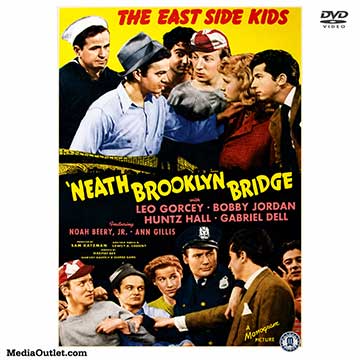
May 30, 1883: Grand Openings: Bridge
Openings: New York City (New York, NYC): Bridges And Tunnels In
New York City: Suspension Bridges: The Brooklyn Bridge (The New
York And Brooklyn Bridge, The East River Bridge): The Brooklyn
Bridge Stampede Of 1883: -- #DOTD: #RIP: Six days after the
opening of the Brooklyn Bridge, a woman falling down a stairway at
the Brooklyn approach results in a rumor that the bridge is about
to collapse, causing a stampede which results in at least twelve
people being crushed and killed. In subsequent lawsuits, the
Brooklyn Bridge Company was acquitted of negligence. However, the
company did install emergency phone boxes, a new invention at the
time, and additional railings. On May 17, 1884, one of the circus
master P. T. Barnum's most famous attractions, Jumbo the elephant,
led a parade of 21 elephants over the Brooklyn Bridge. This helped
to lessen doubts about the bridge's stability while also promoting
Barnum's circus. On Sale @ 15% Off Discount Till Midnight PT!
https://store.earthstation1.com/39neath-brooklyn-bridge-east-side-kids-bowery-boys-movie-d39.html
Today's
EarthStation1.com 15% Off Commemorative Memorial Title: Peter
Ustinov's Russia TV Documentary Series DVD, Video Download, USB
Today, May 30, 2026
May 30 [O.S. May 18], 1896: The Monarchy
Of Russia (The Russian Monarchy): Royal Accessions: Successions To
The Russian Throne: Coronations: The Coronation Of Nicholas II And
Alexandra Feodorovna: The Khodynka Tragedy (Russian: Khodynskaya
Tragediya): -- #DOTD: #RIP: A mass panic on Khodynka Field in
Moscow during the festivities of the coronation of Russian Tsar
Nicholas II results in a panic and crowd crush that killed 1,389
people. The Khodynka Tragedy was a human stampede that occurred on
Khodynka Field in Moscow, Russia during the festivities following
the coronation of the last Emperor of Russia, Nicholas II. While
1,282 corpses were collected from the scene, injury estimates
range widely from 1,200 to 20,000. Nicholas II and his wife
Alexandra were crowned Emperor and Empress of Russia on May 26
[O.S. May 14] 1896. Four days later, a banquet was going to be
held for the people at Khodynka Field. Within the area, a town
square, theatres, 150 buffets for the distribution of gifts, and
20 pubs were built for the celebrations. Near the celebration
square was a field that had a ravine and many gullies. On the
evening of May 29, people who had heard rumours of coronation
gifts began to gather in anticipation. The gifts which everyone
was to receive were a bread roll, a sausage, pretzels, gingerbread
and a commemorative cup. At about 6 a.m. several thousand people
(estimates reached 500,000) were already gathered on the field.
Rumours spread that there was not enough beer or pretzels for
everybody, and that the enamel cups contained gold coins. A police
force of 1,800 men failed to maintain civil order, and a
catastrophic crowd crush occurred. A total of 1,282 corpses were
collected from the scene, and the injured numbered between 9,000
and 20,000, according to different estimates. Another commonly
cited figure reports "more than 2,600 casualties, including
1,389 deaths". Most of the victims were trapped in a ditch
and were trampled or suffocated there. Despite the tragedy, the
program of festivities continued as planned elsewhere on the large
field, with many people unaware of what had happened. The Emperor
and Empress made an appearance in front of the crowds on the
balcony of the Tsar's Pavilion in the middle of the field around 2
p.m. By that time, the traces of the incident had been cleaned up.
A festive ball had been scheduled that night at the French
embassy. When Nicholas heard of the stampede, "he did not
display the slightest emotion and that night attended a ball given
in his honor". Grand Duke Alexander Mikhailovich warned the
tsar not to go to the French ball, but Nicholas II attended
nonetheless. Li Hongzhang, China's Imperial Commissioner on a
European tour, was the most notable witness. Li was amused and
said a Chinese emperor would not have attended the ball. The next
morning, Nicholas and Empress Alexandra attended a funeral service
for the dead, and then spent the rest of the day visiting the
injured in several hospitals. Nicholas donated 1,000 rubles to
each family of the dead or injured, and established special
orphanages for the children of the victims. The state paid for the
funerals. The government distributed a large amount of aid to the
families of the dead, and a number of minor officials were
dismissed. The negligence and the tone-deaf response of the
imperial authorities, however, caused further public indignation.
Grand Duke Alexander Mikhailovich wrote in his memoirs that "The
radiant smile on the face of Grand Duke Sergei prompted foreigners
to remark that the Romanovs lacked judgment." Grand Duke
Sergei Alexandrovich, then Governor-General of Moscow, became
known as "The Prince Of Khodynka" and the Emperor
received the nickname of "Nicholas The Bloody". Nicholas
II wrote in his diary: "19th of May. Saturday. Until now,
everything was going, thank God, like clockwork, but today there
was a great mishap. The crowd staying overnight at Khodynka,
awaiting the start of the distribution of lunch and mugs pushed
against buildings and there was a terrible crush, and awful to say
trampled around 1300 people!! I found out about it at 10+1/2 hours
before the report by [minister of war] Vannovski; a disgusting
impression was left by this news. At 12+1/2 we had lunch and then
Alix [Czarina] and I went to Khodynka to be present at this sad
"national holiday." Actually there was nothing going on:
we looked from the pavilion at the huge crowd that surrounded the
stage from which the orchestra played all the time the anthem and
"Glory." Went to Petrovsky [palace], where at the gate I
received several delegations and then entered the yard. Here
dinner was served under four tents for all township heads. I had
to make a speech, and then another for the assembled marshals of
the nobility. After going around the table, we left for the
Kremlin. Dinner at Mama's at 8. Went to the ball at [French
ambassador] Montebello's. It was very nicely arranged, but the
heat was unbearable. After dinner, left at 2." Leo Tolstoy
was so moved by the tragedy that he wrote the epic tale "Khodynka:
An Incident of the Coronation of Nicholas II".
#KhodynkaTragedy #NicholasII #NikolaiII #NicholasIIOfRussia
#EmperorOfAllRussia #HouseOfRomanov #TheRomanovs
#NicholasTheBloody #CoronationsInRussia #RussianEmpire
#LastEmperors #Russia #RussianHistory #MP4 #VideoDownload #DVD On
Sale @ 15% Off Discount Till Midnight PT!
https://store.earthstation1.com/peter-ustinov39s-russia-dvds-complete-6-part-tv-series-2-d3962.html
Today's
EarthStation1.com 15% Off Commemorative Memorial Title: Hollywood
(1980) Silent Movie History Series DVD, Video Download, USB
Today, May 30, 2026
May 30, 1899: #BOTD: #HBD! Irving
Thalberg, American screenwriter and film producer during the early
years of motion pictures whose films carved out an international
market, projecting a vital and positive image of American life
rooted in democracy and freedom, known as "The Boy Wonder"
for his youth and ability to select scripts, choose actors, gather
production staff, and make profitable films, including Grand
Hotel, The Hunchback of Notre Dame, China Seas, Camille, Mutiny on
the Bounty, and The Good Earth (d. September 14, 1936) is #born
Irving Grant Thalberg in Brooklyn, New york to German Jewish
immigrant parents William and Henrietta (Haymann). Shortly after
birth, he was diagnosed with "blue baby syndrome",
caused by a congenital disease that limited the oxygen supply to
his heart. The prognosis from the family's doctor and specialists
was that he might live to the age of twenty, or at most, to
thirty. During his high school years in Brooklyn, he began having
attacks of chest pains, dizziness and fatigue. This affected his
ability to study, though until that time he was a good student.
When he was 17 he contracted rheumatic fever, and was confined to
bed for a year. His mother, in order to prevent him falling too
far behind other students, brought him homework from school,
books, and tutors to teach him at home. She also hoped that the
schoolwork and reading would distract him from the "tantalizing
sounds" of children playing outside his window. With little
to entertain him, he read books as a main activity. He devoured
popular novels, classics, plays, and biographies. His books, of
necessity, replaced the streets of New York, and led to his
interest in classical philosophy and philosophers, such as William
James. When Thalberg returned to school, he finished high school
but lacked the stamina for college, which he felt would have
required constant late-night studying and cramming for exams.
Instead, he took part-time jobs as a store clerk, and in the
evenings, to gain some job skills, taught himself typing,
shorthand and Spanish at a night vocational school. When he turned
18, he placed an advertisement in the local newspaper hoping to
find better work: "Situation Wanted: Secretary, stenographer,
Spanish, English, high school education, no experience; $15".
He found work as an office secretary at Universal Pictures' New
York office, and later became personal secretary to the studio's
founder and president, Carl Laemmle. Among Thalberg's duties were
transcribing and editing notes that Laemmle had written during
screenings of his films. He earned $25 weekly, becoming adept at
making insightful servations, which impressed Laemmle. Laemmle
took Thalberg to see his Los Angeles production facility, where he
spent a month watching how movie production worked. Before
returning to New York, Laemmle told Thalberg to remain and "keep
an eye on things for me." Two months later, Laemmle returned
to California, partly to see how well Thalberg was able to handle
the responsibilities he was given. Thalberg gave him suggestions,
and thus impressed Laemmle by his ability to understand and
explain problems. Thalberg suggested, "The first thing you
should do is establish a new job of studio manager and give him
the responsibility of watching day-to-day operations."
Laemmle immediately agreed: "All right. You're it." In
shock, Thalberg replied, "I'm what?" Laemmle told him to
take charge of the Los Angeles studio, which he did in early 1919.
When aged 20, Thalberg became responsible for immediately
overseeing the nine ongoing film productions and nearly thirty
scenarios then under development. His youth was a subject of
conversation within the movie community. Executives from other
studios, actors, and film crew, often mistook him to be a junior
employee. Movie columnist Louella Parsons, upon first being
introduced to him, asked, "What's the joke? Where's the new
general manager?" After five minutes of talking to Thalberg,
however, she later wrote about "Universal's Boy Wonder":
"He might be a boy in looks and age, but it was no child's
mind that was being asked to cope with the intricate politics of
Universal City." Novelist Edna Ferber responded the same way,
writing that "I had fancied motion-picture producers as large
gentlemen smoking oversized cigars. But this young man whose word
seemed so final at Universal City ... impressed me deeply."
The male actors in the studio had a similar reaction. Lionel
Barrymore, who was nearly twice his age, recalled their meetings:
"I used to go into his office with the feeling I was
addressing a boy. In a moment, I would be the one who felt young
and inexperienced. I would feel he was not one, but all the forty
disciples." Thalberg likewise gained the respect of leading
playwrights, some of whom also looked down on him due to his
youth. George S. Kaufman, co-author of Dinner at Eight, several
Marx Brothers films, and two George Gershwin plays, came from New
York to meet with Thalberg. Afterward he confided to his friend,
Groucho Marx: "That man has never written a word, yet he can
tell me exactly what to do with a story. I didn't know you had
people like that out here." Actress Norma Shearer, whom he
later married, was surprised after he greeted her at the door,
then walked her to his office for her first job interview: "Then
you're not the office boy?" she asked. He smiled, as he sat
himself behind his desk: "No, Miss Shearer, I'm Irving
Thalberg, vice-president of the Mayer Company. I'm the man who
sent for you." His younger-than-normal age for a studio
executive was usually mentioned even after he left Universal to
help start up MGM. Screenwriter Agnes Christine Johnson, who
worked with Thalberg for years, described his contribution during
meetings: "He's so marvelous that no one who doesn't know him
can believe it. Seeing him sitting in with all the important
people, looking such a boy, and deferred to by everybody, you'd
think that either they were crazy or you were. But if you stayed
and listened, you'd understand. He has a mind like a whip. Snap!
He has an idea - the right idea - the only idea!" Conrad
Nagel, who starred in numerous Thalberg films, reported "Thalberg
never raised his voice. He just looked into your eyes, spoke
softly, and after a few minutes he cast a spell on you." Film
producer Walter Wanger said "You thought that you were
talking to an Indian savant. He could cast a spell on anybody."
His talent as a producer was enhanced by his "near-miraculous"
powers of concentration, notes film critic J. Hoberman. As a
result, he was never bored or tired, and supplemented his spare
time with reading for his own amusement, recalls screenwriter
Bayard Veiller, with some of his favorite authors being Francis
Bacon, Epictetus, and Immanuel Kant. After leaving Universal
Pictures, he partnered with Louis B. Mayer's new studio and, after
it merged with two other studios, helped create
Metro-Goldwyn-Mayer (MGM). He was made head of production of MGM
in 1925, at the age of twenty-six, helping MGM become the most
successful studio in Hollywood. During his twelve years with MGM,
until his early death at age 37, he produced four hundred films,
most of which bore his imprint and innovations, including story
conferences with writers, sneak previews to gain early feedback,
and extensive re-shooting of scenes to improve the film. In
addition, he introduced horror films to audiences and coauthored
the "Production Code," guidelines for morality followed
by all studios. During the 1920s and 1930s, he synthesized and
merged the world of stage drama and literary classics with
Hollywood films. Thalberg created numerous new stars and groomed
their screen images. Among them were Lon Chaney, Ramon Novarro,
John Gilbert, Joan Crawford, Clark Gable, Jean Harlow, Wallace
Beery, Luise Rainer, Greta Garbo, Lionel Barrymore, and Norma
Shearer, who became his wife. He had the ability to combine
quality with commercial success, and was credited with bringing
his artistic aspirations in line with the demands of audiences.
Irving Thalberg died in an oxygen tent at home in Santa Monica,
California of pneumonia at the age of 37. A few weeks earlier,
Thalberg's leading screenwriter, Al Lewin, had proposed doing a
film based on a soon-to-be published book, Gone With The Wind.
Although Thalberg said it would be a "sensational" role
for Gable, and a "terrific picture," he decided not to
do it. He said to Louis B. Mayer "Look, I have just made
Mutiny on the Bounty and The Good Earth. And now you're asking me
to burn Atlanta? No! Absolutely not! No more epics for me now.
Just give me a little drawing-room drama. I'm tired. I'm just too
tired." Besides, Thalberg told Mayer, "[n]o Civil War
picture ever made a nickel". Shortly after the Labor Day,
which fell on September 7 that year, he was diagnozed wih the
disease while on the set of A Day at the Races. His condition
quickly worsened and he died days later. Sam Wood, while directing
A Day at the Races, was given the news by phone. He returned to
the set with tears in his eyes and told the others. As the news
spread, the studio was paralyzed with shock. Work stopped and
hundreds of people wept, with stars, writers, directors, and
studio employees all sharing a sense of loss at the death of a man
who had been a part of their working lives. His funeral took place
two days later, and when the services began the other studios
throughout Hollywood observed five minutes of silence. Producer
Sam Goldwyn wept uncontrollably for two days and was unable to
regain his composure enough to attend. The MGM studio closed for
that day. Services were held at the Wilshire Boulevard Temple that
Thalberg had occasionally attended. The funeral attracted
thousands of spectators who came to view the arrival of countless
stars from MGM and other studios, including Greta Garbo, Jean
Harlow, the Marx Brothers, Charlie Chaplin, Walt Disney, Howard
Hughes, Al Jolson, Gary Cooper, Carole Lombard, Mary Pickford, and
Douglas Fairbanks, among the screen luminaries. The ushers who led
them to their seats included Clark Gable, Fredric March, and
playwright Moss Hart. Erich von Stroheim, who had been fired by
Thalberg, came to pay his respects. Producers Louis B. Mayer, the
Warner brothers, Adolph Zukor, and Nicholas Schenck sat together
solemnly as Rabbi Magnin gave the eulogy. Thalberg is buried in a
private marble tomb in the Great Mausoleum at Forest Lawn Memorial
Park in Glendale, California, lying at rest beside his wife, Norma
Shearer Thalberg Arrouge (Thalberg's crypt was engraved "My
Sweetheart Forever" by Shearer). Over the following days,
tributes were published by the national press. Louis B. Mayer, his
co-founding partner at Metro-Goldwyn-Mayer, said he had lost "the
finest friend a man could ever have", while MGM president
Nicholas Schenck stated that "Thalberg was the most important
man in the production end of the motion-picture industry."
Leading producers from the other studios also expressed their
feelings in published tributes to Thalberg. Cecil B. DeMille of
him "The passing of Irving Thalberg is the greatest
conceivable loss to the motion-picture industry, and I say that
absolutely without qualification. There are hundreds of executives
but only about six men with the genuine genius for making motion
pictures and Mr. Thalberg was the greatest of those. I have long
considered him the most competent and inspired producer in the
business." David O. Selznick described him as "beyond
any question the greatest individual force for fine pictures."
Samuel Goldwyn called him "the foremost figure in the
motion-picture industry ... and an inspiration." M. H.
Aylesworth, Chairman of RKO, wrote that "his integrity,
vision and ability made him the spearhead of all motion-picture
production throughout the world." Harry Warner, president of
Warner Bros., described him as "gifted with one of the finest
minds ever placed at the service of motion-picture production."
Sidney R. Kent, president of Twentieth Century Fox, said that "he
made the whole world richer by giving it the highest type of
entertainment. He was a true genius." Columbia president
Harry Cohn said the "motion picture industry has suffered a
loss from which it will not soon recover...". Darryl F.
Zanuck noted, "More than any other man he raised the industry
to its present world prestige." Adolph Zukor, chairman of
Paramount, stated, "Irving Thalberg was the most brilliant
young man in the motion picture business." Jesse Lasky said,
"It will be utterly impossible to replace him." Among
the condolences that came from world political leaders, President
Franklin D. Roosevelt wrote, "The world of art is poorer with
the passing of Irving Thalberg. His high ideals, insight and
imagination went into the production of his masterpieces."
Among the pictures that were unfinished or not yet released at the
time of his death were A Day at the Races, The Good Earth,
Camille, Maytime, and Romeo and Juliet. Groucho Marx, star of A
Day at the Races, wrote, "After Thalberg's death, my interest
in the movies waned. I continued to appear in them, but ... The
fun had gone out of picture making." Thalberg's widow, Norma
Shearer, recalled, "Grief does very strange things to you. I
didn't seem to feel the shock for two weeks afterwards. ... then,
at the end of those two weeks, I collapsed." The Irving G.
Thalberg Memorial Award, given out periodically by the Academy Of
Motion Picture Arts And Sciences since 1937, has been awarded to
producers whose body of work reflected consistently high quality
films. On Sale @ 15% Off Discount Till Midnight PT!
https://store.earthstation1.com/hollywood-1980-tv-documentary-series-13-shows-4-dual-lay1980134.html
Today's
EarthStation1.com 15% Off Commemorative Memorial Title: King Of
Jazz 1930 Paul Whiteman John Boles Laura La Plante DVD MP4 USB
Today, May 30, 2026
May 30, 1901: #BOTD: #HBD! Frankie
Trumbauer, jazz composer and soloists, and one of the leading jazz
saxophonists of the 1920s and 1930s (d. June 11, 1956) is #born
Orie Frank Trumbauer in Carbondale, Illinois. His main instrument
was the C-melody saxophone, a now-uncommon instrument between an
alto and tenor saxophone in size and pitch. He also played alto
saxophone, bassoon, clarinet and several other instruments. He was
a composer of sophisticated sax melodies, one of the major small
group jazz bandleaders of the 1920s and 1930s. His landmark
recording of "Singin' the Blues" with Bix Beiderbecke
and Eddie Lang in 1927, was inducted into the Grammy Hall of Fame
in 1977. His major recordings included "Krazy Kat", "Red
Hot", "Plantation Moods", "Trumbology",
"Tailspin", "Singin' the Blues", "Wringin'
an' Twistin'", and "For No Reason at All in C" with
Bix Beiderbecke and Eddie Lang, and the first hit recording of
"Georgia On My Mind" in 1931. "Tram" was
described as one of the most influential and important jazz
saxophonists of the 1920s and 1930s, particularly influencing the
sound of Lester Young. He is also remembered for his musical
collaborations with Bix Beiderbecke, a relationship that produced
some of the finest and most innovative jazz records of the late
1920s. Trumbauer and Beiderbecke also collaborated with jazz
guitarist Eddie Lang, often with bandleader Paul Whiteman. Frankie
Trumbauer died of a heart attack in Kansas City, Missouri, where
he had made his home for some years, aged 55 years. His remains
were cremated, and they were scattered by air over Unity Village,
Lees Summit, Missouri. On Sale @ 15% Off Discount Till Midnight
PT!
https://store.earthstation1.com/king-of-jazz-1930-paul-whiteman-john-boles-laura-la-plante-dvd-mp19304.html
Today's
EarthStation1.com 15% Off Commemorative Memorial Title: Mo' Funny:
Black Comedy In America DVD Video Download
Today, May 30, 2026
May 30, 1902: #BOTD: #HBD! Stepin
Fetchit, African American vaudevillian, comedian, singer, dancer
and film actor (d. November 19, 1985) is #born Lincoln Theodore
Monroe Andrew Perry in Key West, Florida to West Indian immigrants
of Jamaican and Bahamian descent. Considered to be the first Black
actor to have a successful film career, his highest profile was
during the 1930s in films and on stage, when his persona of Stepin
Fetchit was billed as the "Laziest Man in the World".
Perry parlayed the Fetchit persona into a successful film career,
becoming the first Black actor to earn 1M USD. He was also the
first Black actor to receive featured screen credit in a film.
Perry's film career slowed after 1939 and nearly stopped
altogether after 1953. Around that time, Black Americans began to
see his Stepin Fetchit persona as an embarrassing and harmful
anachronism, echoing negative stereotypes. However, the Stepin
Fetchit character has undergone a re-evaluation by some scholars
in recent times, who view him as an embodiment of the trickster
archetype. Stepin Fetchit died of pneumonia and heart failure at
the age of 83 at the Motion Picture & Television Country House
and Hospital, where he moved after suffering a stroke in 1976
which ended his acting career. He was buried at Calvary Cemetery
in East Los Angeles with a Catholic funeral Mass. On Sale @ 15%
Off Discount Till Midnight PT!
https://store.earthstation1.com/mo39-funny-black-comedy-in-america-dvd-video-downlo39.html
Today's
EarthStation1.com 15% Off Commemorative Memorial Title: Lum And
Abner Old Time Radio Series MP3 Set DVD, Download, USB Stick
Today, May 30, 2026
May 30, 1906: #BOTD: #HBD! Norris Goff,
American comedian in radio and film best known for his portrayal
of Abner Peabody on the rural radio comedy series Lum and Abner
(d. June 7, 1978) is #born in Cove, Arkansas. Nicknamed "Tuffy,"
he soon moved to Mena, Arkansas where he met his longtime friend
and partner Chester Lauck (Lum) and graduating from Mena High
School in 1924. Despite their fame as backwoodsmen, both actors
graduated from the University of Arkansas, where Goff became a
member of the Sigma Chi fraternity. Goff and his partner had
experience as blackface entertainers, but had also worked up a
hillbilly skit based on their own life experiences and friends.
Performing on local radio, they soon landed their own network
series in 1931. In addition to playing the role of the likable but
naive, checker-playing Abner (who worked with Lum at the "Jot
'Em down Store" in fictitious Pine Ridge), Goff co-wrote the
earliest episodes with Lauck, and played many of the other
recurring characters, including postmaster Dick Huddleston (named
after a real life friend in Mena), con-man Squire Skimp, Mousy
Gray, and in the sentimental annual Christmas show, Doc Miller.
Goff and Lauck also guest starred as Lum and Abner on radio series
such as Bing Crosby's Kraft Music Hall; Goff also made a handful
of solo appearances, notably guesting as the father of Andy Devine
in an episode of The Jack Benny Program. Goff reprised his role as
Abner for seven films between 1940 and 1956. Unlike Lauck, who
virtually retired outside of playing Lum, Goff continued to make
occasional guest appearances on television in the 1960s. Goff
appeared in one episode apiece of two situation comedies with
rural themes: Gomer Pyle, U.S.M.C. (as Gomer's grandfather) and
The Andy Griffith Show (playing a local storekeeper). Upon
retirement he lived in Palm Springs, California. He died of a
stroke at the age of 72 in Palm Desert, California. He is buried
at Desert Memorial Park in Cathedral City, California. On Sale @
15% Off Discount Till Midnight PT!
https://store.earthstation1.com/lum-and-abner-radio-mp3-dvd-complete-broadcast3.html
Today's
EarthStation1.com 15% Off Commemorative Memorial Title: Benny
Goodman's Camel Caravan Swing School Radio MP3 CD, Download, USB
Today, May 30, 2026
May 30, 1909: #BOTD: #HBD! Benny Goodman,
Jewish American jazz and swing clarinet player, songwriter, and
bandleader, known as the "King of Swing", widely
considered to be the greatest Jazz clarinet player (d. June 13,
1986) is #born Benjamin David Goodman in Chicago, Illinois to poor
Russian Jewish immigrant parents. In the mid-1930s, Goodman led
one of the most popular musical groups in the United States. His
concert at Carnegie Hall in New York City on January 16, 1938 is
described by critic Bruce Eder as "the single most important
jazz or popular music concert in history: jazz's 'coming out'
party to the world of 'respectable' music.". Goodman's bands
launched the careers of many major jazz artists. During an era of
racial segregation, he led one of the first well-known integrated
jazz groups. Goodman performed nearly to the end of his life while
exploring an interest in classical music. Benny Goodman died from
a heart attack while taking a nap at his apartment in Manhattan
House, a 21-story residential condominium building at 200 East
66th Street on the Upper East Side of Manhattan in New York City,
aged 77. He is buried at Long Ridge Union Cemetery in Stamford,
Connecticut. On Sale @ 15% Off Discount Till Midnight PT!
https://store.earthstation1.com/benny-goodman39s-camel-caravan-swing-school-old-time-radio-mp3393.html
Today's
EarthStation1.com 15% Off Commemorative Memorial Title: Rock &
Roll An Unruly History 10 Part TV Series MP4 Video Download DVD
Today, May 30, 2026
May 30, 1915: #BOTD: #HBD! Maxine Powell,
African American etiquette instructor and talent agent who taught
grooming, poise, and social graces to many recording artists at
Motown in the 1960s (d. October 14, 2013) is #born Maxine Blair in
Texarkana, Texas, she was raised by her aunt in Chicago, Illinois.
She graduated from Hyde Park High School in 1933, attended Madam
C.J. Walker's School of Beauty Culture, and worked as a manicurist
to finance her acting studies; she also studied elocution and
dance. In the early 1940s she worked as a model and as a personal
maid, and she developed a one-woman show, An Evening with Maxine
Powell, which she performed with a group at the Chicago Theatre.
She moved to Detroit, Michigan, in 1945 and taught
self-improvement and modeling classes before opening the Maxine
Powell Finishing and Modeling School in 1951. She bought a large
house in 1953, which became the largest banquet facility in
Detroit for African Americans, and worked as a talent agent,
bringing black productions and artists to Detroit theaters and
placing black models in advertising campaigns. Around this time
she hired a printing business to prepare programs for her annual
Las Vegas-style fashion show. The business was operated by the
family of Berry Gordy. She and Gordy became friends, and in the
early 1960s he asked her opinion of the young artists that had
signed with his record company, Motown. In 1964, she closed her
school to be a consultant to Motown's talent. When Motown expanded
into new offices in 1966, she was hired to work in the company's
department of artist personal development, teaching artists such
as Smokey Robinson and the Miracles, Marvin Gaye, the Jackson 5
and the Supremes, whose Mary Wilson stated Powell taught them more
than stage presence, but "tools for us as human beings".
In Powell's words, she turned them into performers "fit for
kings and queens." Powell left Motown in 1969 and taught
personal development courses from 1971 until 1985 at Wayne County
Community College. On May 31, 2013, Powell suffered a fall. Her
health steadily declined until her death of natural causes on
October 14, 2013, at the age of 98 at Providence Hospital in
Southfield, Michigan. Maxine Powell died of natural causes at
Providence Hospital in Southfield, Michigan at the age of 98 after
suffering a fall on n May 31, 2013 that caused her health to
steadily decline. She is buried at Woodlawn Cemetery in Detroit,
Michigan. On Sale @ 15% Off Discount Till Midnight PT!
https://store.earthstation1.com/rock-amp-roll-an-unruly-history-10-part-tv-series-mp4-video-download-104.html
Today's
EarthStation1.com 15% Off Commemorative Memorial Title: Abraham
Lincoln Documentaries Set MP4 Video Download Or DVD
Today, May 30, 2026
May 30, 1922: Dedications: Monument
Dedications: -- The Lincoln Memorial is dedicated in Washington,
DC. The Lincoln Memorial is a U.S. national memorial that honors
the 16th president of the United States, Abraham Lincoln. Built in
the form of a neoclassical temple, it is at the western end of the
National Mall in Washington, D.C. Henry Bacon is the memorial's
architect. The designer of the large interior statue, Abraham
Lincoln (1920), is Daniel Chester French. The statue was carved in
marble by the Piccirilli brothers, the painter of the interior
murals was Jules Guerin, and the epitaph above the statue was
written by Royal Cortissoz. Dedicated in May 1922, it is one of
several memorials built to honor an American president. It has
been a major tourist attraction since its opening, and over the
years, has occasionally been used as a symbolic center focused on
race relations and civil rights. Doric style columns line the
temple exterior, and the inscriptions inside include two
well-known speeches by Lincoln, the Gettysburg Address and his
second inaugural address. The memorial has been the site of many
famous speeches, including Martin Luther King Jr.'s "I Have a
Dream" speech delivered on August 28, 1963, during the rally
at the end of the March On Washington for Jobs and Freedom. Like
other monuments on the National Mall - including the nearby
Vietnam Veterans Memorial, Korean War Veterans Memorial, and World
War II Memorial - the national memorial is administered by the
National Park Service under its National Mall and Memorial Parks
group. It has been listed on the National Register of Historic
Places since October 15, 1966, and was ranked seventh on the
American Institute of Architects' 2007 list of America's Favorite
Architecture. The memorial is open to the public 24 hours a day,
and more than 7 million people visit it annually. On Sale @ 15%
Off Discount Till Midnight PT!
https://store.earthstation1.com/abraham-lincoln-documentaries-dvd.html
Today's
EarthStation1.com 15% Off Commemorative Memorial Title: WABC Radio
Airchecks MP3 Collection 1960s-1980s DVD, MP3 Download, USB
Today, May 30, 2026
May 30, 1928: #BOTD: #HBD! Herb Oscar
Anderson, morning D.J. for the New York Top 40 station WABC-AM
during most of the 1960s (d. January 29, 2017) is #born in South
Beloit, Illinois, and was raised along with his four siblings at
the Odd Fellows orphanage in nearby Lincoln, Illinois because his
widowed mother was too poor to support them. He and his mother
were eventually reunited. When Mr. Anderson arrived at WABC in
1960, the station was in the early stages of a battle for
listeners with WMCA, WINS and WMGM. He was one of the station's
"Swingin' 7" air personalities, a group that included
Scott Muni and was known as the All Americans. But Mr. Anderson
was a throwback in a changing music scene, a fan of the big band
sound, not necessarily the rock 'n' roll he was playing on a
50,000-watt station that reached well beyond the city limits. His
son John James, an actor who played Jeff Colby on the prime-time
soap opera "Dynasty", said "My father walked into
his job at WABC wearing wingtips and a suit and left in wingtips
and a suit.". As the station's low-key "morning mayor,"
Mr. Anderson had a mandate: to appeal to adults whose buying power
was critical to advertisers, more than to the teenagers who were
already tuning in. Each morning, his booming, melodic voice
crooned his lyrics to his signature song, "Hello Again":
"Hello again, here's my best to you. Are your skies all gray?
I hope they're blue.". He recorded that song, as he did a few
others, and wrote lyrics to instrumentals by Nelson Riddle and
Bert Kaempfert. Mr. Anderson's old-fashioned approach set him
apart from other D.J.'s at the station, like the exuberant Bruce
Morrow (a.k.a. Cousin Brucie), who courted teenagers. In effect,
Mr. Anderson had said, there were two WABCs: one in the morning,
and one for the rest of the day. "We had to make money,"
Mr. Anderson told MusicRadio77.com, a website devoted to the Top
40 legacy of the station, which switched to a talk format in 1982.
"No question about it. I was for the housewife, mother and
children. It was a combination that had to be done." Allan
Sniffen, who runs MusicRadio77.com, said, "His job was to
come in and sound like a grown-up, not like Cousin Brucie.".
He died on a Sunday of kidney failure in Bennington, Vermont near
Hoosick Falls, N.Y., where he had a home, aged 88. He is buried at
Chesterton Cemetery in Chesterton, Indiana. On Sale @ 15% Off
Discount Till Midnight PT!
https://store.earthstation1.com/wabc-musicradio-shows-mp3-dvd-60s80s-am-360807775.html
Today's
EarthStation1.com 15% Off Commemorative Memorial Title: Outer
Space Films 12: The Apollo-Soyuz Test Project DVD MP4 USB Drive
Today, May 30, 2026
May 30, 1934: #BOTD: #HBD! Alexei Leonov,
Soviet/Russian cosmonaut, Air Force Major general, writer and
artist, first human to walk in space (d. October 11, 2019) is
#born Alexei Arkhipovich Leonov in Listvyanka, West Siberian Krai,
Russian SFSR, Soviet Union. became the first person to conduct a
spacewalk on March 18, 1965, exiting his Voskhod 2 space capsule
for 12 minutes and 9 seconds. In July 1975, Leonov commanded the
Soyuz capsule in the Soyuz-Apollo mission, which docked in space
for two days with an American Apollo capsule. Alexei Leonov died
at age 85 in Moscow, Russia after a long illness. His funeral took
place on October 15, and he was buried at The Federal Military
Memorial Cemetery in Mytischi, Moscow Oblast, Russia. He was the
last living member of the five cosmonauts in the Voskhod
programme. He was survived by his wife Svetlana Dozenko, daughter
Oksana, and two grandchildren; his other daughter, Viktoria, died
in 1996. On Sale @ 15% Off Discount Till Midnight PT!
https://store.earthstation1.com/outer-space-films-12-the-apollosoyuz-test-project-dvd-mp4-usb-dr124.html
Today's
EarthStation1.com 15% Off Commemorative Memorial Title: The Great
Depression 7 Part Documentary Series MP4 Video Download DVD
Today, May 30, 2026
May 30, 1937: Labor Union Disputes (Trade Union Disputes): Strikes (Strike Actions, Labor Strikes, Labour Strikes): Steel Industry Strikes: The Little Steel Strike: The 1937 Memorial Day Massacre: -- Chicago police shoot and kill ten unarmed labor demonstrators in Chicago. The incident arose after U.S. Steel signed a union contract, which caused smaller steel manufacturers (called 'Little Steel'), including Republic Steel, to vehemently refuse to do likewise. In protest, the Steel Workers Organizing Committee (SWOC) of the Congress of Industrial Organizations (CIO) called a strike. On Memorial Day 1937, unionists, their families and sympathisers gathered at Sam's Place, a former tavern and dance hall at 113th Street and Green Bay Avenue, that served as the headquarters of the SWOC. There was an outdoor picnic lunch, speakers, and songs, and some estimate the crowd was between 1,500 to 2,500 including picketers and their families, strike sympathizers, and curious passersby. The crowd began to march across the prairie towards the Republic Steel mill to picket, but a line of roughly 300 Chicago policemen blocked their path. The foremost protestors argued their right to continue. The police fired on the crowd, and as the crowd fled from their gunfire, police shot and killed ten people, four dying that day and six others subsequently from their injuries. Nine people were permanently disabled and another 28 had serious head injuries from police clubbing. Dorothy Day, who was present, wrote: "On Memorial Day, May 30, 1937, police opened fire on a parade of striking steel workers and their families at the gate of the Republic Steel Company, in South Chicago. Fifty people were shot, of whom 10 later died; 100 others were beaten with clubs." In the wake of the massacre, newsreel footage of the event, which made clear that the event was in fact a police riot, was suppressed for fear of creating, in the words of an official at Paramount News agency, "mass hysteria." Initial news coverage of the event instead framed the crowd as a violent threat to social order, arguing that police merely acted in self-defense. Still photographs were published in major newspapers such as the Chicago Tribune along with captions such as: "At the Height of the Battle--Here are policemen using their nightsticks and tear gas to subdue the attackers." Paramount did release edited clips from the newsreel footage of the massacre that portray the crowd, rather than the police, as threatening and riotous. Years later, one of the protesters, Mollie West, recalled a policeman yelling to her that day, "Get off the field or I'll put a bullet in your back." No policemen were ever prosecuted. A Coroner's Jury declared the killings to be "justifiable homicide." The press often called it a labor or red riot. President Franklin Roosevelt responded to a union plea, "The majority of people are saying just one thing, 'A plague on both your houses.'" A memorial plaque at the base of a flagpole with the names of the 10 people who were killed is located at 11731 South Avenue O, the former United Steel Workers Local 1033 union hall, which is now occupied by the United Auto Workers Local 3212. Thirty years to the day of the massacre, it was dedicated on May 30, 1967. As of November of 2021, the flagpole base with plaque is still at the Avenue O location, but the flagpole is missing. The United Steel Workers/United Auto Workers building at the site is occupied by someone, but there was no signage anywhere. The Republic Steel Memorial Day Massacre Sculpture, created by former Republic Steel employee Edward Blazak, was dedicated in 1981. Originally located near the main gate at 116th Street and Burley Avenue, it was rededicated in 2008 and relocated to 11659 South Avenue O, at the southwest corner of the grounds of a Chicago Fire Department station housing Engine #104. On Sale @ 15% Off Discount Till Midnight PT! https://store.earthstation1.com/grde7padosem.html
Today's
EarthStation1.com 15% Off Commemorative Memorial Title: Sir Arthur
Harris Of RAF Bomber Command During WWII DVD, Download, USB
Today, May 30, 2026
May 30-31, 1942: The European Civil War:
World War II: The Second European War (The European Theater Of
World War II): The Western Front Of World War II: Air Warfare Of
World War II: Strategic Bombing During World War II: European Air
Operations During The Battle Of Europe: Thousand-Bomber Raids: RAF
Strategic Bombing During The Second World War: The Bombing Of
Cologne In World War II: Operation Millennium:-- History's first
1,000 bomber raid occurs when one thousand Royal Air Force Bomber
Command bombers launch a 90-minute attack on Cologne, Germany.
Codenamed Operation Millennium, the massive raid was launched for
two primary reasons: 1) It was expected that the devastation from
such raids might be enough to knock Germany out of the war or at
least severely damage German morale; and 2) The raids were useful
propaganda for the Allies to use against Germany, but also and
particularly useful for RAF Bomber Command head Arthur Harris's
concept of a Strategic Bombing Offensive for use against the
concept's critics among the Allies. Bomber Command's poor
performance in bombing accuracy during 1941 had led to calls for
the force to be split up and diverted to other urgent theatres,
such as The Battle Of The Atlantic. This headline-grabbing heavy
raid on Germany was a way for Harris to demonstrate to the War
Cabinet that, given the investment in numbers and technology,
Bomber Command could make a vital contribution to victory. This
was the first time that the "bomber stream" tactic was
used, a saturation attack tactic developed by Bomber Command to
overwhelm the nighttime German aerial defences of the Kammhuber
Line (the Allied name given to the German night air defense system
established by German Col. Josef Kammhuber, consisting of control
sectors equipped with radars, searchlights and an associated night
fighter, with each sector directing its night fighter into visual
range of Allied bombers). Most of the tactics used in this raid
remained the basis for standard Bomber Command operations for the
next two years, and some elements remained in use until the end of
the war. On Sale @ 15% Off Discount Till Midnight PT!
https://store.earthstation1.com/bomber-harris-dvd-marshal-sir-arthur-wwii-rafbomber-command.html
Today's
EarthStation1.com 15% Off Commemorative Memorial Title: Alaska At
War: Japanese WWII Invasion Of Alaska DVD, Download, USB
Today, May 30, 2026
May 30, 1943: World War II: The Pacific
War (The Asia-Pacific War, The Pacific Theater Of World War II):
The Pacific Ocean Theater Of World War II: The American Theater Of
World War II (The Americas Theater Of World War II): The Aleutian
Islands Campaign (The Alaksa Campaign) (Japanese: Aryushan Homen
No Tatakai, "The Battle Of The Aleutians"): The Battle
Of Attu (Operation Landcrab): -- The U.S. 7th Infantry Division
retakes the Aleutian Island of Attu off the coast of Alaska from
occupying Japanese forces. The Battle of Attu, which took place on
May 11-30, 1943, was a battle fought between forces of the United
States, aided by Canadian reconnaissance and fighter-bomber
support, and the Empire Of Japan on Attu Island off the coast of
the Territory of Alaska as part of the Aleutian Islands Campaign.
A battle of the Pacific War, it was one of the few military
actions that took place during the Second World War in the
American Theater, and was the only land battle of World War II
fought on incorporated territory of the United States. It is also
the only land battle in which Japanese and American forces fought
in Arctic conditions. The more than two-week battle ended when
most of the Japanese defenders were killed in brutal hand-to-hand
combat after a final banzai charge broke through American lines.
On Sale @ 15% Off Discount Till Midnight PT!
https://store.earthstation1.com/alaska-at-war-dvd-wwii-invasion-by-japan.html
Today's
EarthStation1.com 15% Off Commemorative Memorial Title: TV Music &
Dance Shows #15 Ready Steady Go Vol II DVD MP4 Flash Drive
Today, May 30, 2026
May 30, 1944: #BOTD: #HBD! Lenny
Davidson, English guitarist and songwriter, best known as the
guitarist for the Dave Clark Five, is #born Leonard Arthur
Davidson in Enfield, Middlesex, England. He started playing the
guitar when he was a teenager. After leaving school, he worked at
a company that made steel pipes. In 1961 he joined 'The Dave Clark
Five with Stan Saxon', the forerunner of The Dave Clark Five.
According to Mike Smith (the DC5's lead singer and keyboardist),
Dave Clark was looking for a lead guitarist and asked Smith if he
knew anybody. Smith recommended Davidson saying there was no one
better. Smith and Davidson had worked together in a previous band.
In 1963, the Dave Clark Five signed to EMI and released their
debut album Glad All Over in March 1964. In total, the group
appeared on The Ed Sullivan Show 18 times, more than any over
British Invasion group. He was one of three members of the group
who wrote songs. The Dave Clark Five were big competitors with The
Beatles during 1963 and 1964, knocking many of their songs off the
number one spot on numerous music charts. He wrote their 1965 hit
"Catch Us If You Can", and contributed five more tunes
on the Catch Us If You Can soundtrack album, although Davidson was
the only member of the group not to have one single line of
dialogue in the film. The Dave Clark Five were one of the first
leading groups in The British Invasion, cultural phenomenon of the
mid-1960s, when rock and pop acts from the United Kingdom and
other aspects of British culture became popular in the United
States. He co-wrote five songs, including "Crying Over You"
and "When" to their 1965 Coast to Coast album, and sang
lead on the 1967 hit "Everybody Knows" which reached
number 2 on the UK Singles Chart. Lenny sang co-lead with Smith on
their Because. The Dave Clark Five sold more than 100 million
records and scored 15 consecutive Top 20 U.S. hit singles. The
Dave Clark Five broke up in 1970, but was quickly reformed by
Clark and Smith as "Dave Clark and Friends", albeit
without Davidson, Huxley, and Payton. After the Dave Clark Five
broke up in 1970, Davidson later relearned the guitar and became a
music teacher in Hertfordshire, and also owned a company that
provided repair and maintenance services for church organs.
Following the death of Clark Five bassist Rick Huxley on 11
February 2013, Davidson and Clark are the last surviving members.
He also owned an Antique shop, as stated by Mike Smith. Davidson
was inducted as part of the group into the Rock and Roll Hall of
Fame in March 2008 along with the then fellow surviving band
members Dave Clark and Rick Huxley. Mike Smith died 11 days before
the ceremony from Pneumonia aged 64. Davidson mentioned that they
arrived in New York City for the ceremony on March 8, exactly 44
years after the group's first appearance on The Ed Sullivan Show.
Lenny also told a story of when the five went to see Ella
Fitzgerald perform at the same hall the ceremony was held at, and
the audience having to evacuate when a curtain caught fire from a
lit cigarette. On Sale @ 15% Off Discount Till Midnight PT!
https://store.earthstation1.com/classic-tv-music-amp-dance-shows-15-ready-steady-go-ii-d15.html
Today's
EarthStation1.com 15% Off Commemorative Memorial Title: The
Unknown Soldier w/ Jason Robards DVD, MP4 Download, USB Drive
Today, May 30, 2026
May 30, 1958: Memorial Day: -- The Tomb
Of The Unknown Soldier (Arlington): -- The remains of two
unidentified American servicemen, killed in action during World
War II and the Korean War respectively, are buried at the Tomb Of
The Unknown Soldier in Arlington National Cemetery. The Tomb Of
The Unknown Soldier is a historic monument dedicated to deceased
U.S. service members whose remains have not been identified. It is
located in Arlington National Cemetery in Virginia, United States.
The World War I "Unknown" is a recipient of the Medal of
Honor, the Victoria Cross, and several other foreign nations'
highest service awards. The U.S. Unknowns who were interred are
also recipients of the Medal of Honor, presented by U.S.
presidents who presided over their funerals. The monument has no
officially designated name. On Sale @ 15% Off Discount Till
Midnight PT!
https://store.earthstation1.com/the-unknown-soldier-hosted-by-jason-robards-dvd.html
Today's
EarthStation1.com 15% Off Commemorative Memorial Title: Vietnam:
The Ten Thousand Day War TV Series DVD, Video Download, USB
Today, May 30, 2026
May 30, 1963: The Aftermath Of World War
II: The Cold War: The Cold War In Asia: The Indochina Wars: The
Vietnam War (The Second Indochina War, The Vietnam Conflict, The
Resistance War Against America): The United States In The Vietnam
War: Protests In Vietnam: The Buddhist Crisis (Vietnamese: Bien Co
Phat Giao): -- The first open demonstration during the eight-year
rule of Ngo Dinh Diem occurs outside South Vietnam's National
Assembly in protest of pro-Catholic discrimination against
Buddhists. The Buddhist Crisis was a period of political and
religious tension in South Vietnam between May and November 1963,
characterized by a series of repressive acts by the South
Vietnamese government and a campaign of civil resistance, led
mainly by Buddhist monks. The crisis ended with a coup in November
1963 by the Army of the Republic of Vietnam, and the arrest and
assassination of President Ngo Dinh Diem on November 2, 1963. On
Sale @ 15% Off Discount Till Midnight PT!
https://store.earthstation1.com/vietnam-the-10000-day-war-4-dual-layer-dvds-all-13-10000413.html
Today's
EarthStation1.com 15% Off Commemorative Memorial Title: The Doors:
The Doors Are Open! Live Concerts MP4 Video Download DVD
Today, May 30, 2026
May 30, 1968: The Aftermath Of World War
II: The Cold War: France: The History Of France: The Modern
History Of France: Governments Of France: The French Fifth
Republic: The Protests Of 1968: The Counterculture Of The 1960s:
Student Rights: Student Rights In Higher Education: Student
Activism (Campus Activism): Student Protest (Campus Protest):
Labor Union Disputes (Trade Union Disputes): Strikes (Strike
Actions, Labor Strikes, Labour Strikes): May 68 (French: Mai 68)
(The May 1968 Events In France): -- After the de Gaulle
administration's attempts to quell the nationwide wildcat "May
1968" strikes by police action only inflamed the situation
further, leading to street battles with the police in Paris's
Latin Quarter and the spread of general strikes and occupations
throughout France, Charles De Gaulle fled to a French military
base in Baden-Baden, Germany; on May 30th, when he reappeared
publicly after his return, he dissolved the French National
Assembly by a radio appeal and called for new parliamentary
elections for 23 June 1968. Immediately after, violence evaporated
almost as quickly as it arose, workers went back to their jobs,
and just under one million of his supporters marched on the
Champs-Elysees in Paris. When the elections were finally held in
June, the Gaullist party emerged even stronger than before. This
is the turning point of what became known in France as the May
1968 Events, the volatile period of civil unrest in France during
May 1968 punctuated by demonstrations and massive general strikes
as well as the occupation of universities and factories across
France. At the height of its fervor, it brought the entire economy
of France to a virtual halt. The protests reached such a point
that political leaders feared civil war or revolution; the
national government itself momentarily ceased to function after
President Charles de Gaulle secretly fled France for a few hours.
The protests spurred an artistic movement, with songs, imaginative
graffiti, posters, and slogans. "May 68" affected French
society for decades afterward. It is considered to this day as a
cultural, social and moral turning point in the history of the
country. As Alain Geismar, one of the leaders of the time, later
pointed out, the movement succeeded "as a social revolution,
not as a political one". The unrest began with a series of
student occupation protests against capitalism, consumerism,
American imperialism and traditional institutions, values and
order. It then spread to factories with strikes involving 11
million workers, more than 22% of the total population of France
at the time, for two continuous weeks. The movement was
characterized by its spontaneous and de-centralized wildcat
disposition; this created contrast and sometimes even conflict
between itself and the establishment, trade unions and workers'
parties. It was the largest general strike ever attempted in
France, and the first nationwide wildcat general strike. The
student occupations and wildcat general strikes initiated across
France were met with forceful confrontation by university
administrators and police. On Sale @ 15% Off Discount Till
Midnight PT!
https://store.earthstation1.com/the-doors-the-doors-are-open-live-london-rock-concert-dvd.html
Today's
EarthStation1.com 15% Off Commemorative Memorial Title: Outer
Space Films 9: Mars Probes DVD, Video Download, USB Flash Drive
Today, May 30, 2026
May 30, 1971: Rocket Launches: The
History Of Spaceflight: The Aftermath Of World War II: The Cold
War: The Space Age: The Space Race: Space Probes: Interplanetary
Space Probes: The United States Space Program: The Mariner
Program: Mariner 9 (Mariner Mars '71 / Mariner-I): -- The first
spacecraft to orbit another planet, Mariner 9, is launched at
22:23:04 UTC atop an Atlas SLV-3C Centaur-D from Cape Canaveral to
map 70% of the surface of Mars, and to study temporal changes in
the atmosphere and surface there. On November 14, 1971, Mariner 9
entered orbit around Mars, becoming the first spacecraft to orbit
another planet - only narrowly beating the Soviets' Mars 2 and
Mars 3, which both arrived within a month.. Mariner 9 was an
unmanned NASA space probe that contributed greatly to the
exploration of Mars and was part of the Mariner program. It was
launched toward Mars on May 30, 1971 from Cape Canaveral Air Force
Station and reached the planet on November 14, of the same year.
After months of dust storms it managed to send back clear pictures
of the surface. Mariner 9 returned 7329 images over the course of
its mission, which concluded in October 1972. On Sale @ 15% Off
Discount Till Midnight PT!
https://store.earthstation1.com/outer-space-films-9-mars-space-probe-projects-viking-amp-mariner-dv9.html
Today's
EarthStation1.com 15% Off Commemorative Memorial Title: The
History Of Jazz A Video Retrospective DVD, MP4 Download, USB Drive
Today, May 30, 2026
May 30, 1977: #BOTD: #HBD! Paul Desmond,
American saxophonist and composer (d. November 25, 1924) #dies,
after years of chain smoking and poor health, of lung cancer aged
52 in Manhattan, New York following one last tour with Brubeck.
His remains were cremated, and his ashes scattered at an
undisclosed location. Paul Desmond was born Paul Emil Breitenfeld
in San Francisco, California. He was an American jazz alto
saxophonist and composer, best known for his work with the Dave
Brubeck Quartet and for composing that group's biggest hit, "Take
Five". He was one of the most popular musicians to come out
of the cool jazz scene. In addition to his work with Brubeck, he
led several groups and collaborated with Gerry Mulligan, Chet
Baker, Jim Hall, and Ed Bickert. On Sale @ 15% Off Discount Till
Midnight PT!
https://store.earthstation1.com/the-history-of-jazz-by-billy-taylor-parts-i-amp-ii-dvd.html
Today's
EarthStation1.com 15% Off Commemorative Memorial Title: The 1989
Tiananmen Square Protests DVD, MP4 Download, USB Flash Drive
Today, May 30, 2026
May 30, 1989: The Aftermath Of World War
II: The Cold War: Democracy Movements Of China : The Revolutions
Of 1989 (The Fall Of Nations, The Autumn Of Nations, The Fall Of
Communism): The 1989 Tiananmen Square Protests And Massacre (The
June Fourth Incident [Chinese: Liusi Shijian, "The Six-Four
Incident"], The Tiananmen Square Massacre., The '89 Democracy
Movement, The Tiananmen Square Incident, The Tiananmen Uprising):
The Goddess Of Democracy (The Goddess Of Democracy And Freedom,
The Spirit Of Democracy, The Goddess Of Liberty (Chinese: Ziyou
Nushen, "Statue Of Liberty"): -- The 33-foot high
"Goddess Of Democracy" statue is unveiled in Tiananmen
Square by student demonstrators. The Goddess Of Democracy, also
known as the Goddess Of Democracy And Freedom, the Spirit Of
Democracy, and the Goddess Of Liberty (Mandarin Chinese: Ziyou
Nushen), was a 10-metre-tall (33 ft) statue created during the
1989 Tiananmen Square protests. The statue was constructed over
four days out of foam and papier-mache over a metal armature and
was unveiled and erected on Tiananmen Square on May 30 1989. The
constructors decided to make the statue as large as possible to
try to dissuade the government from dismantling it: the government
would either have to destroy the statue-an action which would
potentially fuel further criticism of its policies-or leave it
standing. Nevertheless, the statue was destroyed on June 4, 1989,
by soldiers clearing the protesters from Tiananmen square. Since
its destruction, numerous replicas and memorials have been erected
around the world, including in Hong Kong, San Francisco,
Washington, D.C., and Vancouver. On Sale @ 15% Off Discount Till
Midnight PT!
https://store.earthstation1.com/the-1989-tiananmen-square-protests-dvd-mp4-usb-19894.html
Today's
EarthStation1.com #OnThisDay Commemorative Memorial Title: The Old
Time Radio Comedy MegaSet MP3 Collection DVD, Download, USB
Today, May 30, 2026 May 30: National Water A Flower Day: --
Recognizes the season of caring for our garden plants. This time
of year, our flower gardens should be in full bloom. Keeping them
hydrated sometimes seems like a full-time job. It's often a
therapeutic business, caring for a living thing. The more they're
nurtured, the more they thrive. It's important to know whether
your flowers like damp soil or to be more on the drier side. Newly
planted seeds will need daily watering until germination. Most
plants prefer well-drained soil. If they are potted, they may
require daily watering. However, if they are planted in the ground
or are heat-resistant plants, they may require less frequent
watering. The holiday also offers an opportunity to care for the
gardens of those who may be homebound or in the hospital. Take the
time to visit a friend who may need some cheering up by bringing
them some freshly watered flowers. Pamper your indoor plants and
flowers, and tend to your garden or window pots to make sure all
your flowers get a drink on Water a Flower Day. If it hadn't been
for coffee, cocoa, vanilla, lavender, camomile, marijuana, and
many other flowering plants and trees, our world would have been a
barren, dismal place. So National Water a Flower Day is that
yearly reminder to show our flowers how much we appreciate them
for their sumptuous colors, their fragrant blossoms and their
medicinal, or sometimes lethal, properties. National Water a
Flower Day is a day that recognizes the importance of caring for
our garden plants. Just think about how dull the world would be if
we did not have beautiful flowers everywhere! Most people would
agree that we tend to take flowers for granted. This is because we
see them whenever we look out of the window or go for a walk.
However, our walks would not be anywhere near as beautiful or
peaceful without nature! Caring for plants can often be a
therapeutic act. It is a great way to spend time when you're
looking to de-stress and cut off from work. You are able to focus
on the beauty around you, nurturing the flowers in your garden so
that they thrive. Plus, caring for flowers is no easy business!
Flowers have their own unique requirements in terms of their
optimal growth conditions. Some flowers prefer to be in the shade,
others like full sunlight. There are then those that thrive in
damp soil, as well as flowers that prefer their soil to be on the
drier side. They may require watering on a daily basis if they are
potted. This merely scratches the surface of the different factors
you need to consider when caring for the plants in your garden.
This highlights why it is important to do your research before you
head outside with the watering can! If you do not give your
flowers enough water, this can result in a flower garden wilting
and producing barely any blooms at all if any! Overwatering your
flowers can be just as damaged, though, as this can drown your
plants and cause disease. The best time for you to water your
plants is during the morning, ideally sometime between 6 and 10
a.m. The cooler temperature is beneficial because it reduces
evaporation and enables the water to remain where you need it,
i.e. with the plant. You can help to keep the soil moist by
spreading mulch around. One way you can keep track of how much
water you are getting in your garden is by placing a rain gauge
outside. You can also find plenty of good magazines, books, and
websites that can help you to further your knowledge on looking
after the plants you have outside of your home. The flower is the
reproductive part of a plant that creates the seeds. Plants
produce fruit and flowers that are called angiosperms. There are
almost 300,000 species of angiosperms, and their fruits and
flowers can differ significantly. Flowers and fruits are some of
the most useful features for identifying species of plants. A lot
of modern cultures see flowers as attractive, and they have
fascinated scholars for thousands and thousands of years. In fact,
a first-century physician of Greek called Dioscorides wrote De
materia medica, which is considered the most significant early
book about plants. This was the first text about the medicinal
uses of plants, featuring a lot of diagrams of plants and their
flowers. The book assisted other physicians in identifying the
sorts of plants to assign their patients for certain sicknesses.
It was deemed an essential reference on plants for over 1,500
years.
https://store.earthstation1.com/old-time-radio-comedy-mp3-dvd-megaset-2-dis32.html
May 30: National Water A Flower Day: --
Recognizes the season of caring for our garden plants. This time
of year, our flower gardens should be in full bloom. Keeping them
hydrated sometimes seems like a full-time job. It's often a
therapeutic business, caring for a living thing. The more they're
nurtured, the more they thrive. It's important to know whether
your flowers like damp soil or to be more on the drier side. Newly
planted seeds will need daily watering until germination. Most
plants prefer well-drained soil. If they are potted, they may
require daily watering. However, if they are planted in the ground
or are heat-resistant plants, they may require less frequent
watering. The holiday also offers an opportunity to care for the
gardens of those who may be homebound or in the hospital. Take the
time to visit a friend who may need some cheering up by bringing
them some freshly watered flowers. Pamper your indoor plants and
flowers, and tend to your garden or window pots to make sure all
your flowers get a drink on Water a Flower Day. If it hadn't been
for coffee, cocoa, vanilla, lavender, camomile, marijuana, and
many other flowering plants and trees, our world would have been a
barren, dismal place. So National Water a Flower Day is that
yearly reminder to show our flowers how much we appreciate them
for their sumptuous colors, their fragrant blossoms and their
medicinal, or sometimes lethal, properties. National Water a
Flower Day is a day that recognizes the importance of caring for
our garden plants. Just think about how dull the world would be if
we did not have beautiful flowers everywhere! Most people would
agree that we tend to take flowers for granted. This is because we
see them whenever we look out of the window or go for a walk.
However, our walks would not be anywhere near as beautiful or
peaceful without nature! Caring for plants can often be a
therapeutic act. It is a great way to spend time when you're
looking to de-stress and cut off from work. You are able to focus
on the beauty around you, nurturing the flowers in your garden so
that they thrive. Plus, caring for flowers is no easy business!
Flowers have their own unique requirements in terms of their
optimal growth conditions. Some flowers prefer to be in the shade,
others like full sunlight. There are then those that thrive in
damp soil, as well as flowers that prefer their soil to be on the
drier side. They may require watering on a daily basis if they are
potted. This merely scratches the surface of the different factors
you need to consider when caring for the plants in your garden.
This highlights why it is important to do your research before you
head outside with the watering can! If you do not give your
flowers enough water, this can result in a flower garden wilting
and producing barely any blooms at all if any! Overwatering your
flowers can be just as damaged, though, as this can drown your
plants and cause disease. The best time for you to water your
plants is during the morning, ideally sometime between 6 and 10
a.m. The cooler temperature is beneficial because it reduces
evaporation and enables the water to remain where you need it,
i.e. with the plant. You can help to keep the soil moist by
spreading mulch around. One way you can keep track of how much
water you are getting in your garden is by placing a rain gauge
outside. You can also find plenty of good magazines, books, and
websites that can help you to further your knowledge on looking
after the plants you have outside of your home. The flower is the
reproductive part of a plant that creates the seeds. Plants
produce fruit and flowers that are called angiosperms. There are
almost 300,000 species of angiosperms, and their fruits and
flowers can differ significantly. Flowers and fruits are some of
the most useful features for identifying species of plants. A lot
of modern cultures see flowers as attractive, and they have
fascinated scholars for thousands and thousands of years. In fact,
a first-century physician of Greek called Dioscorides wrote De
materia medica, which is considered the most significant early
book about plants. This was the first text about the medicinal
uses of plants, featuring a lot of diagrams of plants and their
flowers. The book assisted other physicians in identifying the
sorts of plants to assign their patients for certain sicknesses.
It was deemed an essential reference on plants for over 1,500
years.
https://store.earthstation1.com/old-time-radio-comedy-mp3-dvd-megaset-2-dis32.html
Today's
EarthStation1.com #OnThisDay Commemorative Memorial Title: The
Fall Of The Roman Empire 1964 DVD, Video Download, USB Flash Drive
Today, May 30, 2026May 30: National Sophia Day
(International Sofia Day): -- Celebrates those with the name
typically used for females; the masculine Sophus for males, is of
Greek origin and today has many derivative forms: Sophia, Sophie,
Sofi, and so on, but ultimately, they all stem from the original
name, Sofia. Sofia, as a given name, is extremely popular in
western society, and its popularity can largely be attributed to
European nobility and the Christian churches throughout the Middle
Ages and Renaissance period. The name Sofia, or Sophia, which
means 'wisdom,' was first recorded in the fourth century, and
sources suggest that it emerged from the Byzantine Empire, also
known as the Eastern Roman Empire. The region was influenced
heavily by Greek culture and language, and as such, the word for
'wisdom' in Greek, 'S?f?a' became a commonly held girl's name
throughout Europe following a strong connection with the church.
In 304 A.D., Sophia of Rome died, a venerated Christian martyr and
victim of Roman persecution. A mother of three women, Faith, Hope,
and Love, Sophia watched as her three daughters all fell victim to
Roman cruelty. The Eastern Orthodox Church revered her and her
three children, and Sophia was designated the patron saint of late
winter frosts because she mourned the loss of her daughters for
three days before passing away in her sleep. The name Sofia is
strongly associated with the Christian faith, and its use became
very popular among European nobles who wished divine wisdom on
their daughters. The name Sofia, fortunately, was not exclusively
used for daughters of nobility and is seen as having been a
popular name in many nations throughout history. Saint Sophia
holds a powerful connection with European countries that
experience harsh winters, and she is often prayed to at the end of
winter, to fend off any late frosts. The name has been kept alive
and continues to remain a popular choice for newborns
internationally.
https://store.earthstation1.com/the-fall-of-the-roman-empire-1964-dvd-set-aleq-guinness-sophia-l1964.html
Today's
EarthStation1.com #OnThisDay Commemorative Memorial Title:
Aviation History Films Collection DVD MP4 Video Download
Today, May 30, 2026May 30, 1912: #DOTD: #RIP: Wilbur Wright,
American aviation pioneer (b. April 16, 1867) #dies of typhoid
fever in Dayton, Illinois, aged 45. He is buried along with his
brother Orville in the Wright family plot at Woodland Cemetery,
Dayton, Ohio. Wilbur Wright was born in Millville, Indiana.
Orville and his brother Wilbur achieved what is recognized as the
world's first successful sustained and controlled flight of a
motor-driven aircraft in 1903, following years of experimentation
with kites and gliders. The Wright brothers, Orville and Wilbur,
were two American aviators, engineers, inventors, and aviation
pioneers who are generally credited with inventing, building, and
flying the world's first successful airplane. They made the first
controlled, sustained flight of a powered, heavier-than-air
aircraft on December 17, 1903, four miles south of Kitty Hawk,
North Carolina. In 1904-05 the brothers developed their flying
machine into the first practical fixed-wing aircraft. Although not
the first to build experimental aircraft, the Wright brothers were
the first to invent aircraft controls that made fixed-wing powered
flight possible. The brothers' fundamental breakthrough was their
invention of three-axis control, which enabled the pilot to steer
the aircraft effectively and to maintain its equilibrium. This
method became and remains standard on fixed-wing aircraft of all
kinds. From the beginning of their aeronautical work, the Wright
brothers focused on developing a reliable method of pilot control
as the key to solving "the flying problem". This
approach differed significantly from other experimenters of the
time who put more emphasis on developing powerful engines. Using a
small homebuilt wind tunnel, the Wrights also collected more
accurate data than any before, enabling them to design and build
wings and propellers that were more efficient than any before.
Their first U.S. patent, 821,393, did not claim invention of a
flying machine, but rather, the invention of a system of
aerodynamic control that manipulated a flying machine's surfaces.
They gained the mechanical skills essential for their success by
working for years in their shop with printing presses, bicycles,
motors, and other machinery. Their work with bicycles in
particular influenced their belief that an unstable vehicle like a
flying machine could be controlled and balanced with practice.
From 1900 until their first powered flights in late 1903, they
conducted extensive glider tests that also developed their skills
as pilots. Their bicycle shop employee Charlie Taylor became an
important part of the team, building their first airplane engine
in close collaboration with the brothers. The Wright brothers'
status as inventors of the airplane has been subject to
counter-claims by various parties. Much controversy persists over
the many competing claims of early aviators. Edward Roach,
historian for the Dayton Aviation Heritage National Historical
Park argues that they were excellent self-taught engineers who
could run a small company, but they did not have the business
skills or temperament to dominate the growing aviation industry.
https://store.earthstation1.com/aviation-history-films-2-dual-layer-dvd-se2.html
Today's
EarthStation1.com #OnThisDay Commemorative Memorial Title:
Choppers: Helicopter History TV Documentary Series DVD, Download,
USB
Today, May 30, 2026May 30, 1995: #DOTD: #RIP: Arthur M.
Young, American inventor, helicopter pioneer, philosopher,
astrologer, and author, designer of Bell Helicopter's first
helicopter, the Model 30, and inventor of the stabilizer bar used
on many of Bell's early helicopter designs (b. November 3, 1905)
#dies of cancer at age 89, at his home in Berkeley, California.
The final disposition of his remains is unknown. Arthur Middleton
Young, born in Paris, France, founded the "Institute for the
Study of Consciousness" in Berkeley in 1972. Young advocated
process philosophy, an attempt to integrate the realm of human
thought and experience with the realm of science so that the
concept of universe is not limited to that which can be physically
measured. Young's theory embraces evolution and the concept of The
Great Chain Of Being, a hierarchical structure of all matter and
life thought by medieval Christianity to have been decreed by God,
beginning with God and descending through angels, humans, animals
and plants to minerals. He has influenced such thinkers as
Stanislav Grof and Laban Coblentz. Arthur was the son of Eliza
Coxe and Philadelphia landscape painter Charles Morris Young. He
was interested in developing a comprehensive theory of reality
from an early age. He felt that to acquire the intellectual tools
needed for such rigorous study, he should first develop an
understanding of mathematics and engineering. With this decision
he was following a career path similar to that of philosopher
Alfred North Whitehead, who was a mathematician before he
developed the first process philosophy. Thus after graduation from
Princeton University in 1927 Young searched for a suitable
invention to develop. In 1928 he returned to his father's farm in
Radnor, Pennsylvania, to begin twelve solitary years of efforts to
develop the helicopter into a useful device. Young's private
experiments with helicopter design had mostly involved small scale
models. After twelve years on his own using the models, he took
his results and models to the Bell Aircraft Company in Buffalo,
New York, in 1941, and the company agreed to build full-scale
prototypes. While war was looming for the US in late 1941 he was
issued the key rotor stabilizer bar (also known as a flybar)
patent, assigned it to Bell and moved to Buffalo to work with
them. In June 1942 he moved his five-person team to Gardenville,
New York, a hamlet on the north border of West Seneca, New York,
where they could work in relative secrecy. The first test flight
of the prototype Model 30 occurred in July 1943, and on March 8,
1946, the company received Helicopter Type Certificate H-1 for the
world's first commercial helicopter, the Bell Model 47. This was
the "whirlybird" featured in the M*A*S*H movie and
television series and was so successful that it continued to be
manufactured through 1974. A design as well as a utilitarian
success, it was added to the permanent collection of the Museum of
Modern Art of New York City in 1984. Young had become profoundly
disturbed by the development of nuclear weapons at the end of the
Second World War and decided that humanity needed a new
philosophical paradigm. In August 1946 Young recorded in his notes
the idea of the psychopter - the helicopter as the "winged
self", a metaphor for the human spirit. By October 1947 Young
felt his work at Bell was complete, and he turned to the next
phase of his career as a philosopher of mind (or soul). In 1949,
the Franklin Institute awarded him the Edward Longstreth Medal. In
1952, Young and his wife Ruth organized the Foundation for the
Study of Consciousness in Philadelphia, the forerunner of the
Institute for the Study ofConsciousness. Also in 1952, Young and
Ruth participated in seances conducted by Andrija Puharich's
Roundtable Foundation. Young married Priscilla Page in 1933. He
was divorced from Priscilla in 1948, and later that year, married
artist Ruth Forbes Paine (1903-1998) of the Boston Forbes family,
a great-granddaughter of Ralph Waldo Emerson and the mother of
Michael Paine. Ruth Forbes was formerly married to George Lyman
Paine Jr. Their son Michael Paine married Ruth Hyde Paine, a
friend of Lee Harvey Oswald's wife Marina, who was living with her
at the time of the JFK assassination.
https://store.earthstation1.com/choppers-complete-13-part-tv-series-4-dvd-134.html
Today's
EarthStation1.com #OnThisDay Commemorative Memorial Title: The
Satellite Sky: The Space Race DVD, Video Download, USB Flash Drive
Today, May 30, 2026May 30, 1966: The History Of Spaceflight:
The Aftermath Of World War II: The Cold War: The Space Age: The
Space Race: Missions To The Moon: Space Probes: Lunar Space
Probes: The Soviet Space Program: The Luna Programme (Pejorative:
The Lunik Program): Outer Space Firsts: Luna 10 (Pejorative: Lunik
10, Lunik X): -- The lunar probe Luna 10 (Lunik 10), the first
artificial satellite of the Moon, sends its last radio
transmission. Luna 10 was launched by the Soviet Union on March
31, 1966 at 10:48:00 GMT from Site 31/6 at Baikonur Cosmodrome in
Kazakhstan atop a Molniya-M 8K78M rocket. It was thereafter
launched towards the Moon from an Earth-orbiting platform later
that day, and the spacecraft entered lunar orbit on April 3, 1966,
completing its first orbit 3 hours later (on April 4 Moscow time).
Luna 10 was battery powered and operated for 460 lunar orbits and
219 active data transmissions before radio signals were
discontinued on May 30, 1966. Luna 10 (E-6S series) or Lunik 10
was the tenth of the Soviet Union's Luna programme spacecraft
launched to the Moon.
https://store.earthstation1.com/the-satellite-sky-dvd-cold-war-space-race-films.html
Today's
EarthStation1.com #OnThisDay Commemorative Memorial Title: To The
Moon: The Story In Sound Set CD, MP3 Download, USB Flash Drive
Today, May 30, 2026May 30, 1966: Rocket Launches: The
History Of Spaceflight: The Aftermath Of World War II: The Cold
War: The Space Age: The Space Race: Missions To The Moon: Space
Probes: Lunar Space Probes: The United States Space Program: The
Surveyor Program: Surveyor 1: -- The first U.S. spacecraft to
soft-land on another world, Surveyor 1, is launched at 14:41:01
UTC atop a Atlas LV-3C Centaur-D launch vehicle from Cape
Canaveral's Cape Canaveral Launch Complex 36 (LC-36A). On June 2,
1966, Surveyor 1 landed in Oceanus Procellarum on the Moon,
becoming the first U.S. spacecraft to soft-land on another world.
Surveyor 1 was also the first lunar soft-lander in the uncrewed
Surveyor program of the National Aeronautics and Space
Administration (NASA, United States). This lunar soft-lander
gathered data about the lunar surface that would be needed for the
crewed Apollo Moon landings that began in 1969. The successful
soft landing of Surveyor 1 on the Ocean of Storms was the first by
an American space probe on any extraterrestrial body, occurring on
the first attempt and just four months after the first Moon
landing by the Soviet Union's Luna 9 probe. Surveyor 1 was
launched May 30, 1966, from the Cape Canaveral Air Force Station
at Cape Canaveral, Florida, and it landed on the Moon on June 2,
1966. Surveyor 1 transmitted 11,237 still photos of the lunar
surface to the Earth by using a television camera and a
sophisticated radio-telemetry system. The Surveyor program was
managed by the Jet Propulsion Laboratory, in Los Angeles County,
California, but the Surveyor space probe was designed by Gary
Mizuhara of EOS (Electrical Optical Systems, Covina, Ca.) and
built by the Hughes Aircraft Company in El Segundo, California.
https://store.earthstation1.com/to-the-moon-the-story-in-sound-complete-6-album-set-mp3-63.html
Today's
EarthStation1.com #OnThisDay Commemorative Memorial Title: Swing:
The Best Of The Big Bands DVD, MP4 Video Download, Flash Drive
Today, May 30, 2026May 30, 2000: #DOTD: #RIP: Tex Beneke,
American saxophonist, singer and bandleader, best known for his
associations with bandleader Glenn Miller and former musicians and
singers who worked with Miller (b. February 12, 1914) #dies from
respiratory failure at a nursing home in Costa Mesa, California,
aged 86. He is buried in Greenwood Memorial Park in his hometown
of Fort Worth, Texas. He was survived by his wife, Sandra, of
Santa Ana, California. His saxophone is currently used by the
Arizona Opry. Tex Beneke was born Gordon Lee Beneke in Fort Worth,
Texas. Tex Beneke's band is also associated with the careers of
Eydie Gorme, Henry Mancini and Ronnie Deauville. Beneke also solos
on the recording the Glenn Miller Orchestra made of their popular
song "In The Mood" and sings on another popular Glenn
Miller recording, "Chattanooga Choo Choo". Jazz critic
Will Friedwald considers Beneke to be one of the major blues
singers who sang with the big bands of the early 1940s.
https://store.earthstation1.com/swing-the-best-of-the-big-bands-dvd-complete-tv-series-2-disc2.html
Today's
EarthStation1.com #OnThisDay Commemorative Memorial Title: The
History Of Jazz A Video Retrospective DVD, MP4 Download, USB Drive
Today, May 30, 2026May 30, 1993: #DOTD: #RIP: Sun Ra,
African American jazz composer, bandleader, piano and synthesizer
player, poet and Prince Hall Freemason, known for his experimental
music, "cosmic" philosophy, prolific output, and
theatrical performances (b. May 22, 1914, 1914) #dies at Princeton
Baptist Medical Center in his hometown of Birmingham, Alabama,
aged 79 suffering from congestive heart failure, respiratory
failure, strokes, circulatory problems, and other serious
maladies. He is buried at Elmwood Cemetery in Birmingham with a
footstone that reads "Herman Sonny Blount aka Le Sony'r Ra";
the former name being his birth name, the latter his legal name.
Sun Ra was born Herman Poole Blount in Birmingham, Alabama. He
spent much of his career as leader of "The Arkestra", an
ensemble with an ever-changing name and flexible line-up. Born and
raised in Alabama, Blount eventually became involved in the
Chicago jazz scene during the 1940s. He soon abandoned his birth
name, taking the name Sun Ra (after Ra, the Egyptian God of the
Sun) and developing a complex persona and mythology that would
make him a pioneer of Afrofuturism; he claimed he was an alien
from Saturn on a mission to preach peace, and throughout his life
he consistently denied any ties to his prior identity. His widely
eclectic and avant-garde music would eventually touch on virtually
the entire history of jazz, ranging from swing music and bebop to
free jazz and fusion, and his compositions ranged from keyboard
solos to big bands of over 30 musicians. From the mid-1950s until
his death, Ra led the musical collective The Arkestra (which
featured artists such as Marshall Allen, John Gilmore and June
Tyson throughout its various iterations). Its performances often
included dancers and musicians dressed in elaborate, futuristic
costumes inspired by ancient Egyptian attire and the Space Age.
Though his mainstream success was limited, Sun Ra was a prolific
recording artist and frequent live performer, and remained both
influential and controversial throughout his life for his music
and persona. He is now widely considered an innovator; among his
distinctions are his pioneering work in free improvisation and
modal jazz and his early use of electronic keyboards and
synthesizers. Over the course of his career, he recorded dozens of
singles and over one hundred full-length albums, comprising well
over 1000 songs, making him one of the most prolific recording
artists of the 20th century. Following Sun Ra's death in 1993, the
Arkestra continues to perform.
https://store.earthstation1.com/the-history-of-jazz-by-billy-taylor-parts-i-amp-ii-dvd.html
Today's
EarthStation1.com #OnThisDay Commemorative Memorial Title: The
Golden Age Of Rock 'N' Roll DVD, MP4 Video Download, Flash Drive
Today, May 30, 2026May 30, 2003: #DOTD: #RIP: Mickie Most,
English music producer with a string of hit singles with acts such
as The Animals, Herman' Hermits, The Nashville Teens, Donovan,
Lulu, Suzi Quatro, Hot Chocolate, Arrows, Racey, and The Jeff Beck
Group, often issued on his own RAK Records label (b. June 20,
1938) #dies at his London, England home aged 64 from possibly
peritoneal mesothelioma, a complication of asbestosis. His remains
were cremated, and the ashes given to his widow Christina. A blue
plaque, to commemorate his life, donated by the Heritage
Foundation/Musical Heritage, was unveiled at RAK Studios on May
16, 2004, with his wife and his two daughters Cristalle and
Nathalie in attendance. The investigative journalist Paul Foot
thought it was probable that he contracted the cancer from
ingesting fibres from vinyl tiles impregnated with asbestos,
intended to improve soundproofing in recording studios. Mickie
Most was born Michael Peter Hayes in Aldershot, Hampshire,
England. One of the best examples of Mickie Most's production
genius is "Sunshine Superman", a single written and
recorded by Donovan that John Bush in The Allmusic Guide To Rock
described as "[one of the] classics of the era," and
"the quintessential bright summer sing along". "Sunshine
Superman" reached the top of the Billboard Hot 100 in the
United States, and subsequently became the title track of
Donovan's third album, Sunshine Superman. Chart positions were No.
1 (US, released July 1966), and No. 2 (UK) (UK, released December
1966). It was Donovan's only single to reach No. 1 on Billboard's
Hot 100. It was the first product from the highly successful
three-year collaboration between Donovan and producer Mickie Most,
and is generally considered to be one of the first examples of the
musical genre that came to be known as psychedelia. The song
features styles of psychedelic pop, folk rock, psychedelic folk,
and psychedelic rock. Jimmy Page and John Paul Jones, later of Led
Zeppelin, play on the recording.
https://store.earthstation1.com/the-golden-age-of-rock-39n39-roll-dvd-complete-tv-series-5-39395.html
Today's
EarthStation1.com #OnThisDay Commemorative Memorial Title: World
War II Propaganda Cartoons MP4 Video Download 2 DVD Set
Today, May 30, 2026May 30, 1908: #BOTD: #HBD! Mel Blanc,
American voice actor, actor, radio comedian, and recording artist,
best remembered for his work in animation as the voices of Bugs
Bunny, Daffy Duck, Porky Pig, Tweety Bird, Sylvester the Cat,
Yosemite Sam, Foghorn Leghorn, Marvin the Martian, Pepe Le Pew,
Speedy Gonzales, Wile E. Coyote, Road Runner, the Tasmanian Devil,
and many of the other characters from the Looney Tunes and Merrie
Melodies theatrical cartoons during the golden age of American
animation (d. July 10, 1989) is #born Melvin Jerome Blank in San
Francisco, California, to Eva (nee Katz), a Lithuanian Jewish
immigrant, and Frederick Blank (born in New York to German Jewish
parents). Mel Blanc was a radio star and provided the voices of
such characters as Private Snafu in World War II propaganda
cartoons. Mel Blanc died after nearly two months at Cedars-Sinai
Medical Center of complications from both emphysema and coronary
artery disease, aged 81. He is interred in Hollywood Forever
Cemetery section 13, Pinewood section, Plot #149 in Hollywood. As
specified in his will, his gravestone reads "That's all
folks" - the phrase with which Blanc's character, Porky Pig,
concluded Warner Bros. cartoons.
https://store.earthstation1.com/world-war-ii-propaganda-cartoons-dvd-dual-layer-all-regions.html
Today's
EarthStation1.com #OnThisDay Commemorative Memorial Title: They
Made Me A Criminal 1939 The Dead End Kids DVD, MP4, USB Drive
Today, May 30, 2026May 30, 1967: #DOTD: #RIP: Claude Rains,
English-American Captain and actor whose career spanned almost
seven decades (b. November 10, 1889) #dies from an abdominal
hemorrhage in Laconia, New Hampshire aged 77. His daughter said,
"And, just like most actors, he died waiting for his agent to
call." He was buried at the Red Hill Cemetery in
Moultonborough, New Hampshire. He designed his own tombstone which
reads "All things once, Are things forever, Soul, once
living, lives forever". He was born William Claude Rains in
Clapham, London. After his American film debut as Dr. Jack Griffin
in The Invisible Man (1933), he appeared in such highly regarded
films as The Adventures of Robin Hood (1938), Mr. Smith Goes to
Washington (1939), The Wolf Man (1941), Casablanca and Kings Row
(both 1942), Notorious (1946), Lawrence of Arabia (1962), and The
Greatest Story Ever Told (1965). He was a Tony Award winning actor
and was a four-time nominee for the Academy Award for Best
Supporting Actor. Rains was considered to be "one of the
screen's great character stars" who was, according to the
All-Movie Guide, "at his best when playing cultured
villains". During his lengthy career, he was greatly admired
by many of his acting colleagues, such as Bette Davis, Vincent
Sherman, Ronald Neame, Albert Dekker, Peter O'Toole, John Gielgud,
Charles Laughton and Richard Chamberlain.
https://store.earthstation1.com/they-made-me-a-criminal-dead-end-kids-bowery-boys-dvd.html
Today's
EarthStation1.com #OnThisDay Commemorative Memorial Title:
Pasternak (1989) Boris Pasternak Docudrama DVD, Download, USB
Drive
Today, May 30, 2026May 30, 1960: #DOTD: #RIP: Boris
Pasternak, Soviet Russian poet, novelist, and literary translator,
Nobel Prize laureate, best known as the author of Doctor Zhivago
(b. February 10, 1890) #dies in the evening aged 70 of lung cancer
in his dacha in Peredelkino. He first summoned his sons, and in
their presence said, "Who will suffer most because of my
death? Who will suffer most? Only Oliusha will, and I haven't had
time to do anything for her. The worst thing is that she will
suffer." Pasternak's last words were, "I can't hear very
well. And there's a mist in front of my eyes. But it will go away,
won't it? Don't forget to open the window tomorrow." Shortly
before his death, a priest of the Russian Orthodox Church had
given Pasternak the last rites. Later, in the strictest secrecy, a
Russian Orthodox funeral liturgy, or Panikhida, was offered in the
family's dacha. He is buried at Peredelkino Cemetery in Moscow,
Russia. Boris Pasternak was born Boris Leonidovich Pasternak in
Moscow, Russian Empire. His first book of poems, My Sister, Life
(1917), is one of the most influential collections ever published
in the Russian language. Pasternak's translations of stage plays
by Goethe, Schiller, Calderon de la Barca and Shakespeare remain
very popular with Russian audiences. Outside Russia, Pasternak is
best known as the author of Doctor Zhivago (1957), a novel which
takes place between the Russian Revolution of 1905 and the Second
World War. Doctor Zhivago was rejected for publication in the
USSR. At the instigation of Giangiacomo Feltrinelli, Doctor
Zhivago was smuggled to Milan and published in 1957 and
distributed with the help of the CIA in the rest of Europe.
Pasternak was awarded the Nobel Prize for Literature in 1958, an
event which enraged the Communist Party of the Soviet Union, which
forced him to decline the prize, though his descendants were later
to accept it in his name in 1988.
https://store.earthstation1.com/pasternak-dvd-1989-boris-pasternak-documentary-d1989.html
Today's
EarthStation1.com #OnThisDay Commemorative Memorial Title: Voice
Of The Army WWII Radio Series MP3 Set CD, Download, USB Drive
Today, May 30, 2026May 30, 2006: #DOTD: #RIP: Robert
Sterling, American stage, film, radio and television actor,
soldier and aircraft pilot (b. November 13, 1917) #dies on a
Tuesday at the age of 88 at his home in Brentwood, Los Angeles.
According to the Associated Press, his son, Jeffrey, indicated
that Sterling died of natural causes and also suffered from
debilitating shingles for the last decade of his life. He was
cremated and his ashes were returned to his family in residence.
Robert Sterling was born William Sterling Hart in New Castle,
Pennsylvania, 50 miles northwest of Pittsburgh, Pennsylvania, the
son of Chicago Cubs baseball player William S. Hart. He was best
known for starring in the television series Topper (1953-1955), an
American fantasy sitcom television series based on the 1937 film
Topper, which was based on two novels Topper and Topper Takes a
Trip by Thorne Smith. After signing with Columbia Pictures in
1939, he changed his name to Robert Sterling to avoid confusion
with silent western star William S. Hart. His name was legally
changed while he was a second lieutenant officer attending flight
training in Marfa in West Texas in 1943. Sterling appeared in
small parts for Columbia movies, often uncredited: Blondie Meets
the Boss (1939), Romance of the Redwoods (1939), First Offenders
(1939), Outside These Walls (1939), The Chump Takes a Bump (1939),
That Girl from College (1939), and a serial Mandrake the Magician
(1939). He was in Only Angels Have Wings (1939), Missing Daughters
(1939), and a short with Buster Keaton, Pest from the West (1939).
Sterling was in Good Girls Go to Paris (1939), The Man They Could
Not Hang (1939), Golden Boy (1939), The Gates of Alcatraz (1939),
A Woman is the Judge (1939), The Story of Charles Goodyear (1939),
Scandal Sheet (1939), Mr Smith Goes to Washington (1939), Beware
Spooks! (1939), Blondie Brings Up Baby (1939), The Amazing Mr
Williams (1939), Glove Slingers (1939), The Awful Goof (1939) (a
short), and Crime's End (1939). He was in Nothing But Pleasure
(1940) a Buster Keaton short, and The Heckler (1940) a short with
Charley Chase, At 20th Century Fox he played the lead in Manhattan
Heartbeat (1940) and Yesterday's Heroes (1940). He was in The Gay
Caballero (1940). In November 1940 , Sterling went to
Metro-Goldwyn-Mayer. He appeared in The Penalty (1941) and had the
lead in I'll Wait for You (1941), The Getaway (1941), and Ringside
Maisie (1941) with Ann Sothern, whom he would later marry. He had
a good support role in Two-Faced Woman (1941) with Greta Garbo and
Johnny Eager (1941) with Robert Taylor. Sterling could also be see
in Dr. Kildare's Victory (1942) and This Time for Keeps (1942). He
was billed third in Somewhere I'll Find You (1942), after Clark
Gable and Lana Turner - one of MGM's biggest films of the year.
But just as it seemed Sterling was about to breakthrough as a star
he joined the services. Sterling served in World War II as a
United States Army Air Corps flight instructor. He got out of the
army in October 1945 and MGM announced him for The Last Time I Saw
Paris but the film would not be made for several years, without
Sterling. He appeared in The Secret Heart (1946) at MGM. At RKO he
had the lead in Roughshod (1949). He made an independent Western,
The Sundowners (1950) and did Bunco Squad (1951) at RKO. He was
appearing on Broadway in The Grammercy Ghost when he formed a
relationship with actress/singer Anne Jeffreys. They would marry
in 1951, and go on to play a married couple in the TV series
Topper, as well as on Broadway. Sterling appeared on such shows as
The Ford Theatre Hour, Showtime, U.S.A., The Clock, The Web
(starring in the episode "Homecoming"), Faith Baldwin
Romance Theatre, Celanese Theatre, Lights Out (one episode with
Grace Kelly), Betty Crocker Star Matinee (an episode with Audrey
Hepburn), Suspense, The Gulf Playhouse, Robert Montgomery
Presents, Studio One in Hollywood (an adaptation of The
Ambassadors), and Climax!. Sterling had an excellent part as Steve
Baker, opposite Ava Gardner as Julie, in the hit MGM 1951 film
version of Show Boat. He supported Audie Murphy in Column South
(1953). He and his second wife, actor Anne Jeffreys, also
developed a night club act. The Topper TV series was broadcast on
CBS from October 9, 1953 to July 15, 1955, and stars Leo G.
Carroll in the title role. It finished at #24 in the Nielsen
ratings for the 1954-1955 season. Topper also earned an Emmy
nomination for Best Situation Comedy in 1954. Broadway composer
and lyricist Stephen Sondheim wrote eleven episodes for Topper's
first season with George Oppenheimer. The show's producer was John
W. Loveton, with his agent, Bernard L. Schubert, credited as
co-producer. R.J. Reynolds Tobacco's Camel cigarettes was the
show's sponsor; the Kerbys were seen smoking in every episode, as
required by Reynolds; the actors, along with Carroll, also
appeared in integrated commercials promoting the product at the
end of the show, as well as announcing where free cartons of
Camels were being sent to various military bases and veterans
hospitals each week. Both ABC and NBC aired repeats of these
episodes (ABC in 1955 and NBC in 1956). There were at least three
forms of the opening announcement: "Camel - America's first
choice among cigarettes - presents Topper. Starring - as Marion
Kerby, the loveliest ghost in town - Anne Jeffreys. As George
Kerby, the liveliest ghost in town - Robert Sterling. And Leo G.
Carroll as Topper [a dog bark is heard]. Oh, yes, and ahh... the
deadliest ghost, Neil". In another opening, the announcer
adds, "And there are only three people in the world who can
see or hear them - you and I... and Cosmo Topper". When
Topper was shown in repeats, Anne Jeffreys was introduced as "the
ghostess with the mostest"; Robert Sterling as "that
most sporty spirit," and Leo G. Carroll as "host to said
ghosts." In 1955 Sterling and Jeffreys appeared in a TV
production of Dearest Enemy, adapted by Neil Simon. He continued
to guest star on shows like The Loretta Young Show, Lux Video
Theatre, Star Stage, The 20th Century-Fox Hour, The Ford
Television Theatre, Cavalcade of America, and Telephone Time. On
December 18, 1957, Sterling and Jeffreys played a couple with an
unusual courtship arrangement in "The Julie Gage Story"
on the first season of NBC's Wagon Train. In 1958, the couple
co-starred in another comedy series, Love That Jill on ABC.
Sterling and Jeffries portrayed heads of rival modeling agencies
in New York City. Sterling appeared on The United States Steel
Hour, then returned to features at Fox. He had good roles in
Return to Peyton Place (1961), as Mike Rossi, husband of Eleanor
Parker, and Voyage to the Bottom of the Sea (1961) for Irwin
Allen. In the 1961-1962 television season, Sterling co-starred
with George Chandler and Reta Shaw in CBS's Ichabod and Me, a
sitcom set in New England. He portrayed 44-year-old Bob Major, a
newspaper reporter from New York City, who purchased and ran the
paper in a small town called Phippsboro. In 1963, Sterling starred
in The Twilight Zone episode "Printer's Devil" alongside
Burgess Meredith. He was also in The Alfred Hitchcock Hour and
Naked City, plus A Global Affair (1964) with Bob Hope. After some
additional television work in the early 1960s, Sterling made only
sporadic appearances in later shows such as the hospital drama The
Bold Ones, the sitcoms Nanny and the Professor, Love, American
Style, Diana and The Brian Keith Show, the TV movie Letters from
Three Lovers (1973), and the miniseries Beggarman, Thief in 1979.
In the 1970s Sterling was a vice president and the spokesman for a
company that implemented the software for one of the first
supermarket barcoding and computer inventory systems. He later
launched Sterling & Sons, a Santa Monica company that
manufactured custom golf clubs. In the 1980s he guest starred on
shows like Fantasy Island, Simon & Simon, Masquerade, Murder,
She Wrote, and Hotel. Sterling's star on the Hollywood Walk of
Fame is located at 1709 Vine Street, awarded for his contributions
to the television industry. Sterling was married twice. His first
marriage, in 1943, was to noted actress-singer Ann Sothern. They
had a daughter, Patricia, who became an actress. Sothern and
Sterling divorced in 1949. Sterling met actress-singer Anne
Jeffreys soon after his Broadway debut, and they wed in 1951 and
remained married for 55 years until his death. They had three
sons. Sterling was a Republican who campaigned for Dwight
Eisenhower in the 1952 presidential election.
https://store.earthstation1.com/voice-of-the-army-mp3-cd-complete-world-war-ii-radio-serie3.html
Today's
EarthStation1.com #OnThisDay Commemorative Memorial Title:
Napoleon (1955) Raymond Pellagrin Orson Welles DVD, Download, USB
Today, May 30, 2026May 29, 1932: The European Civil War:
World War I: The First European War (The European Theater Of World
War I): The Aftermath Of World War I: The Aftermath Of World War I
In The United States: The Interwar Period (The Interbellum,
Between The Wars): The Great Depression: The Great Depression In
The United States: The Bonus Army (The Bonus March): -- World War
I veterans begin to assemble in Washington, D.C., in the Bonus
Army to request cash bonuses promised to them to be paid in 1945.
The Bonus Army were the 43,000 marchers - 17,000 U.S. World War I
veterans, their families, and affiliated groups - who gathered in
Washington, D.C. in the summer of 1932 to demand cash-payment
redemption of their service certificates. Organizers called the
demonstrators the "Bonus Expeditionary Force", to echo
the name of World War I's American Expeditionary Forces, while the
media referred to them as the "Bonus Army" or "Bonus
Marchers". The contingent was led by Walter W. Waters, a
former sergeant. Many of the war veterans had been out of work
since the beginning of the Great Depression. The World War
Adjusted Compensation Act of 1924 had awarded them bonuses in the
form of certificates they could not redeem until 1945. Each
certificate, issued to a qualified veteran soldier, bore a face
value equal to the soldier's promised payment compound interest.
The principal demand of the Bonus Army was the immediate cash
payment of their certificates. On July 28, U.S. Attorney General
William D. Mitchell ordered the veterans removed from all
government property. Washington police met with resistance, shots
were fired and two veterans were wounded and later died. President
Herbert Hoover then ordered the Army to assemble on Pennsylvania
Avenue to clear the marchers from the area. Army Chief Of Staff
General Douglas MacArthur, along with his aide Major Dwight D.
Eisenhower, commanded the infantry and cavalry, supported by six
tanks under the command of Major George S. Patton . Despite two
orders by President Hoover to General MacArthur not to cross the
Anacostia bridge into the Bonus Army marcher's camp that night,
the marchers with their wives and children were forcibly driven
out of their campsite, and their shelters and belongings burned. A
second, smaller Bonus March in 1933 at the start of the Roosevelt
administration was defused in May with an offer of jobs with the
Civilian Conservation Corps at Fort Hunt, Virginia, which most of
the group accepted. Those who chose not to work for the CCC by the
May 22 deadline were given transportation home. In 1936, Congress
overrode President Roosevelt's veto and paid the veterans their
bonus nine years early.
https://store.earthstation1.com/napoleon-1955-dvd-raymond-pellagrin-orson-welles-2-19552.html
Today's
EarthStation1.com #OnThisDay Commemorative Memorial Title: DJ
Madness! 1950s-60s-70s Radio Shows DVD, MP3 Download, USB Drive
Today, May 30, 2026October 10, 1940: #BOTD: #HBD! Anita
Humes, , African American singer, former lead singer of The Essex
who in 1963 led them to sell 1 million copies of "Easier Said
Than Done," earning a gold record, followed by two other hits
that year, "Walking Miracle" and "She's Got
Everything" (b. See October 10, 1940) #dies in Harrisburg,
Pennsylvania, the city of her birth, aged 69. She is buried at
Resurrection Cemetery in Harrisburg. Her tombstone reads "ANITA
HUMES CHAPPELLE | LCPL US MARINE CORPS | SP4 US ARMY | VIETNAM |
OCT 10 1940 (Cross) MAY 30 2010". Anita Humes was born the
fourth child and first daughter to the late George E. and Naomi
Thompson Humes. After graduating from Bishop McDevitt High School
in 1958, she enlisted in the U.S. Marine Corps and was assigned to
Camp LeJeune, North Carolina in 1960. She left the Marines in
October 1963 and, as lead singer of The Essex, went on an
eight-month, 36-city Dick Clark Caravan of Stars tour with Bobby
Vee, The Ronettes, Little Eva, Jimmy Clanton and The Dovels. The
Essex were in Dallas, Texas, on November 22, 1963, when President
John F. Kennedy was shot. That show was canceled. In early 1964,
The Essex broke up, and she enlisted in the Army the following
June. She was assigned to Fort Gordon's communications school, and
and toured with the Army Showmobile. She married Gene Chappelle on
October 3, 1964. They were divorced in 1988, but she retained her
married name. She also sang at the Apollo Theatre in New York
City, and appeared on the television show, "To Tell the
Truth", with Kitty Carlisle and Orson Bean. In the 1970s,
Hill headed up a group called the Courtship. In the early '90s,
her group performed at the Benetton Theatre in Pittsburgh for the
PBS member television station WITF-TV (Channel 33) in her homtown
of Harrisburg. #AnitaHumes #Soldiers #Singers #AfricanAmericans
#Blacks #TheEssex #DooWop #PopMusic #MP3 #AudioDownload #DVD
https://store.earthstation1.com/dj-radio-airchecks-mp3-dvd-1950s60s70s-dis319506070.html
Today's
EarthStation1.com #OnThisDay Commemorative Memorial Title: The
Gray Ghost: John Singleton Mosby Civil War MP4 Video Download DVD
Today, May 30, 2026May 30, 1916: #DOTD: John S. Mosby, also
known by "The Gray Ghost", Confederate army cavalry
battalion commander in the American Civil War (b. December 6,
1833) #dies of complications after throat surgery in a Washington,
D.C. hospital at aged 82, noting at the end that it was Memorial
Day. He is buried at the Warrenton Cemetery in Warrenton,
Virginia. John S. Mosby was born John Singleton Mosby in Powhatan
County, Virginia. His command, the 43rd Battalion, Virginia
Cavalry, was able to elude their Union Army pursuers and disappear
by blending in with local farmers and townsmen in an area of
northern central Virginia in which Mosby operated with impunity,
an area which became known as "Mosby's Confederacy".
Mosby spoke out against secession, but reluctantly joined the
Confederate army as a private at the outbreak of the war. He first
served in William "Grumble" Jones's Washington Mounted
Rifles. Jones became a Major and was instructed to form a more
collective "Virginia Volunteers", which he created with
two mounted companies and eight companies of infantry and
riflemen, including the Washington Mounted Rifles. Mosby thought
the Virginia Volunteers lacked congeniality, and he wrote to the
governor requesting to be transferred. However, his request was
not granted. The Virginia Volunteers participated in the First
Battle of Bull Run (First Manassas) in July 1861. In April 1862,
the Confederate Congress passed the Partisan Ranger Act which
"provides that such partisan rangers, after being regularly
received into service, shall be entitled to the same pay, rations,
and quarters, during their term of service, and be subject to the
same regulations, as other soldiers." By June 1862, Mosby was
scouting for J.E.B. Stuart during the Peninsular Campaign,
including supporting Stuart's "Ride Around McClellan",
which Mosby himself had first espied, communicated to his
superiors and offered the strategy used by Stuart to succeed.
Mosby was captured on July 20 by Union cavalry while waiting for a
train at the Beaverdam Depot in Hanover County, Virginia. Mosby
was imprisoned in the Old Capitol Prison in Washington, D.C. for
ten days before being exchanged as part of the war's first
prisoner exchange. Even as a prisoner Mosby spied on his enemy.
During a brief stopover at Fort Monroe he detected an unusual
buildup of shipping in Hampton Roads and learned they were
carrying thousands of troops under Ambrose Burnside from North
Carolina on their way to reinforce John Pope in the Northern
Virginia Campaign. When he was released, Mosby walked to the army
headquarters outside Richmond and personally related his findings
to Robert E. Lee. After the Battle of Fredericksburg, in December,
1862, Mosby and his senior officer J.E.B. Stuart led raids behind
Union lines in Prince William, Fairfax and Loudoun counties,
seeking to disrupt federal communications and supplies between
Washington D.C. and Fredericksburg, as well as provision their own
forces. As the year ended, at Oakham Farm in Loudoun County,
Virginia Mosby gathered with various horsemen from Middleburg,
Virginia who decided to form what became known as Mosby's Rangers.
In January 1863, Stuart, with Lee's concurrence, authorized Mosby
to form and take command of the 43rd Battalion Virginia Cavalry.
This was later expanded into Mosby's Command, a regimental-sized
unit of partisan rangers operating in Northern Virginia. The 43rd
Battalion operated officially as a unit of the Army of Northern
Virginia, subject to the commands of Lee and Stuart, but its men
(1,900 of whom served from January 1863 through April 1865) lived
outside of the norms of regular army cavalrymen. The Confederate
government certified special rules to govern the conduct of
partisan rangers. These included sharing in the disposition of
spoils of war. They had no camp duties and lived scattered among
the civilian population. Mosby required proof from any volunteer
that he had not deserted from the regular service, and only about
10% of his men had served previously in the Confederate Army. The
partisan rangers proved controversial among Confederate army
regulars, who thought they encouraged desertion as well as morale
problems in the countryside as potential soldiers would favor
sleeping in their own (or friendly) beds and capturing booty to
the hardships and privations of traditional military campaigns.
Mosby was thus enrolled in the Provisional Army of the Confederate
States and soon promoted to lieutenant colonel on January 21,
1864, and to colonel, December 7, 1864. Mosby carefully screened
potential recruits, and required each to bring his own horse.
Several weeks after General Robert E. Lee's surrender, Mosby's
status was uncertain. Finally, on April 21, 1865, in Salem,
Virginia, Mosby, rather than surrender, disbanded the rangers, and
on the following day many former rangers rode their worst horses
to Winchester to surrender, receive paroles and return to their
homes. Mosby himself surrendered on June 17, one of the last
Confederate officers to do so. After the war, Mosby became a
Republican and worked as an attorney, supporting his former enemy,
U.S. President Ulysses S. Grant. He also served as the American
consul to Hong Kong and in the U.S. Department of Justice.
https://store.earthstation1.com/the-gray-ghost-john-singleton-mosby-civil-war-mp4-video-download-dv4.html
Today's
EarthStation1.com #OnThisDay Commemorative Memorial Title: The
Gulf Crisis: The Road To War TV Series + Bonus 2 DVDs MP4 Download
Today, May 30, 2026May 28-30, 1990: The Aftermath Of World
War II: The Cold War: The Origins Of The Gulf War (The Persian
Gulf War, Gulf War I): Events Leading To The Gulf War: The Arab
League: The 1990 Arab League Summit (The Emergency Arab Summit
Conference): -- Iraqi president Saddam Hussein says that oil
overproduction by Kuwait and United Arab Emirates was "economic
warfare" against Iraq by exceeding its OPEC quotas for oil
production. In order for the cartel to maintain its desired price
of 18USD per barrel, discipline was required. The United Arab
Emirates and Kuwait were consistently overproducing; the latter at
least in part to repair losses caused by Iranian attacks in the
Iran-Iraq War and to pay for the losses of an economic scandal.
The result was a slump in the oil price - as low as 10USD per
barrel - with a resulting loss of 7B ISD a year to Iraq, equal to
its 1989 balance of payments deficit. Resulting revenues struggled
to support the government's basic costs, let alone repair Iraq's
damaged infrastructure. Jordan and Iraq both looked for more
discipline, with little success. The Iraqi government described it
as a form of economic warfare, which it claimed was aggravated by
Kuwait slant-drilling across the border into Iraq's Rumaila oil
field. According to oil workers in the area, Iraq's slant drilling
claim was fabricated, as "oil flows easily from the Rumaila
field without any need for these techniques." At the same
time, Saddam looked for closer ties with those Arab states that
had supported Iraq in the war. This move was supported by the US,
who believed that Iraqi ties with pro-Western Gulf states would
help bring and maintain Iraq inside the US' sphere of influence.
https://store.earthstation1.com/the-gulf-crisis-the-road-to-war-tv-documentary-series-dvd-mp4-us4.html
Today's
EarthStation1.com #OnThisDay Commemorative Memorial Title: Air
Combat Aerial Warfare Documentary Series DVD, Download, USB Drive
Today, May 30, 2026May 30, 1976: #DOTD: #RIP: Mitsuo
Fuchida, Japanese captain, Imperial Japanese Navy Air Service and
a bomber aviator best known for leading the first air wave attacks
on Pearl Harbor on December 7, 1941 (b. December 3, 1902) #dies of
complications caused by diabetes in Kashiwara, near Osaka at the
age of 73. His burial details are not publicly known. Mitsuo
Fuchida was born Fuchida Mitsuo in Katsuragi, Nara, Japan. In the
fall of 1948, Fuchida was handed a pamphlet about the life of
Jacob DeShazer, a member of the Doolittle Raid who was captured by
the Japanese, which told his story of imprisonment, torture and
his account of an "awakening to God." This increased
Fuchida' interest in Christianity, and after reading the Bible for
himself, he became a Christian. In May 1950, he met DeShazer,
moved to Seattle, Washington and spoke full-time of his conversion
to the Christian faith in presentations titled "From Pearl
Harbor To Calvary". He traveled the United States and Europe
to tell his story. He settled permanently in the United States but
never became a U.S. citizen. #MitsuoFuchida #FuchidaMitsuo
#PearlHaborAttack #AttackOnPearlHarbor #PacificWar #AsiaPacificWar
#PacificOceanTheatreOfWWII #PacificOceanTheaterOfWWII
#SouthWestPacificTheatreOfWWII #SouthWestPacificTheaterOfWWII
#AsiaticPacificTheater #ToraToraTora #WorldWarII #WWII #WW2
#WorldWarTwo #WorldWar2 #SecondWorldWar #MP4 #VideoDownload #DVD
https://store.earthstation1.com/air-combat-all-13-aerial-warfare-history-tv-shows-collecti13.html
Today's
EarthStation1.com #OnThisDay Commemorative Memorial Title: Leo
Szilard: The Genius Behind The Bomb DVD, Video Download, USB Drive
Today, May 30, 2026May 30, 1964: #DOTD: #RIP: Leo Szilard,
Hungarian-American physicist physicist, engineer, inventor and
academic who conceived the nuclear chain reaction in 1933,
patented the idea of a nuclear fission reactor in 1934, and in
late 1939 wrote the letter for Albert Einstein's signature that
resulted in the Manhattan Project that built the atomic bomb (b.
February 11, 1898) #dies in his sleep of a heart attack at the age
of 66 in San Diego, California. His remains were cremated, and are
buried at Lake View Cemetery in Ithaca, Tompkins County, New York.
He was born Leo Spitz in Budapest, Kingdom of Hungary. He was one
of "The Martians", a group of prominent Jewish Hungarian
scientists (mostly, but not exclusively, physicists and
mathematicians) who emigrated to the United States in the early
half of the 20th century. Szilard, who jokingly suggested that
Hungary was a front for aliens from Mars, used this term. In an
answer to the question of why there is no evidence of intelligent
life beyond Earth despite the high probability of it existing,
Szilard responded: "They are already here among us - they
just call themselves Hungarians." Szilard initially attended
Palatine Joseph Technical University in Budapest, but his
engineering studies were interrupted by service in the
Austro-Hungarian Army during World War I. He left Hungary for
Germany in 1919, enrolling at Technische Hochschule (Institute of
Technology) in Berlin-Charlottenburg, but became bored with
engineering and transferred to Friedrich Wilhelm University, where
he studied physics. He wrote his doctoral thesis on Maxwell's
demon, a long-standing puzzle in the philosophy of thermal and
statistical physics. Szilard was the first to recognize the
connection between thermodynamics and information theory. In
addition to the nuclear reactor, Szilard coined and submitted the
earliest known patent applications and the first publications for
the concepts of electron microscope (1928), the linear accelerator
(1928), and the cyclotron (1929) in Germany, proving him as the
originator of the idea of these devices. Between 1926 and 1930, he
worked with Einstein on the development of the Einstein
refrigerator. After Adolf Hitler became chancellor of Germany in
1933, Szilard urged his family and friends to flee Europe while
they still could. He moved to England, where he helped found the
Academic Assistance Council, an organization dedicated to helping
refugee scholars find new jobs. While in England he discovered a
means of isotope separation known as the Szilard-Chalmers effect.
Foreseeing another war in Europe, Szilard moved to the United
States in 1938, where he worked with Enrico Fermi and Walter Zinn
on means of creating a nuclear chain reaction. He was present when
this was achieved within the Chicago Pile-1 on December 2, 1942.
He worked for the Manhattan Project's Metallurgical Laboratory at
the University of Chicago on aspects of nuclear reactor design. He
drafted the Szilard petition advocating a demonstration of the
atomic bomb, but the Interim Committee chose to use them against
cities without warning. After the war, Szilard switched to
biology. He invented the chemostat, discovered feedback
inhibition, and was involved in the first cloning of a human cell.
He publicly sounded the alarm against the possible development of
salted thermonuclear bombs, a new kind of nuclear weapon that
might annihilate mankind. Diagnosed with bladder cancer in 1960,
he underwent a cobalt-60 treatment that he had designed. He helped
found the Salk Institute for Biological Studies, where he became a
resident fellow. Szilard founded Council for a Livable World in
1962 to deliver "the sweet voice of reason" about
nuclear weapons to Congress, the White House, and the American
public.
https://store.earthstation1.com/leo-szilard-the-genius-behind-the-bomb-dvd.html
Today's
EarthStation1.com #OnThisDay Commemorative Memorial Title:
Auschwitz And The Allies 2 Part TV Series DVD, Download, USB Drive
Today, May 30, 2026May 30, 1943: The European Civil War:
World War II: The Second European War (The European Theater Of
World War II): The Holocaust (Shoah): The Holocaust In Poland:
Auschwitz Concentration Camp (KL Auschwitz, KZ Auschwitz): --
Josef Mengele becomes chief medical officer of the
Zigeunerfamilienlager (Romani family camp) at Auschwitz
concentration camp. The Romani are widely known among
English-speaking people by the exonym Gypsies or Gipsies. 23,000
Romani and Sinti peoples were deported to Auschwitz starting on 10
December 1942, when Himmler issued an order to send all Sinti and
Roma (Gypsies) to concentration camps. A separate camp for Roma
was set up at Auschwitz II-Birkenau known as the
Zigeunerfamilienlager (Gypsy Family Camp). The first transport of
German Gypsies arrived on 26 February 1943, and was housed in
Section B-IIe of Auschwitz II. Approximately 20,000 Gypsies died
at Auschwitz by 1944. One transport of 1,700 Polish Sinti and Roma
were killed in the gas chambers upon arrival, as they were
suspected to be ill with spotted fever. Gypsy prisoners were used
primarily for construction work. Thousands died of typhus and noma
due to overcrowding, poor sanitary conditions, and malnutrition.
Anywhere from 1,400 to 3,000 prisoners were transferred to other
concentration camps before the murder of the remaining population.
On 2 August 1944, the SS cleared the Gypsy camp. A witness in
another part of the camp later told of the Gypsies unsuccessfully
battling the SS with improvised weapons before being loaded into
trucks. The surviving population (estimated at 2,897 to 5,600) was
then killed en masse in the gas chambers. The murder of the Romani
people by the Nazis during World War II is known in the Romani
language as the Porajmos (devouring).
https://store.earthstation1.com/auschwitz-and-the-allies-dvd-complete-2-part-tv-serie2.html
Today's
EarthStation1.com #OnThisDay Commemorative Memorial Title: The Age
Of The Enlightenment TV College Course DVD, Download, USB
Today, May 30, 2026May 30, 1778: #DOTD: #RIP: Voltaire,
French Enlightenment historian, playwright, philosopher and
Freemason (b. November 21, 1694) #dies. The accounts of his
deathbed have been numerous and varying, and it has not been
possible to establish the details of what precisely occurred. His
enemies related that he repented and accepted the last rites from
a Catholic priest, or that he died in agony of body and soul,
while his adherents told of his defiance to his last breath.
According to one story of his last words, when the priest urged
him to renounce Satan, he replied, "This is no time to make
new enemies." However, this appears to have originated from a
joke in a Massachusetts newspaper in 1856, and was only attributed
to Voltaire in the 1970s. Because of his well-known criticism of
the Church, which he had refused to retract before his death,
Voltaire was denied a Christian burial in Paris, but friends and
relations managed to bury his body secretly at the Abbey of
Scellieres in Champagne, where the brother of his cousin and
partner Marie Louise Mignot was abbe. His heart and brain were
embalmed separately. On July 11, 1791, the National Assembly of
France, regarding Voltaire as a forerunner of the French
Revolution, had his remains brought back to Paris and enshrined in
the Pantheon, where it resides today. An estimated million people
attended the procession, which stretched throughout Paris. There
was an elaborate ceremony, including music composed for the event
by Andre Gretry. Voltaire was born Francois-Marie Arouet in Paris,
France. He was famous for his wit, his attacks on the established
Catholic Church and Christianity as a whole, and his advocacy of
freedom of religion, freedom of speech, and separation of church
and state. Voltaire was a versatile and prolific writer, producing
works in almost every literary form, including plays, poems,
novels, essays, and historical and scientific works. He wrote more
than 20,000 letters and more than 2,000 books and pamphlets. He
was an outspoken advocate of civil liberties, despite the risk
this placed him in under the strict censorship laws of the time.
As a satirical polemicist, he frequently made use of his works to
criticize intolerance, religious dogma, and the French
institutions of his day. He was an advocate of human rights who
published the landmark Philosophical Letters in 1734. Other
writings include; Zadig, The Century of Louis XIV, The Russian
Empire under Peter The Great, The Philosophical Dictionary, and
Essay on Morals.
https://store.earthstation1.com/the-age-of-enlightenment-5-episodes-tv-college-course-2-dv52.html
Today's
EarthStation1.com #OnThisDay Commemorative Memorial Title: Korean
War The Untold Story Documentary Loretta Swit MP4 Download DVD
Today, May 30, 2026May 30, 2025: #DOTD: #RIP: Loretta Swit,
American stage and television actress, singer, sex symbol and
beauty (b. November 4, 1937) #dies at her home in New York City at
the age of 87. Her remains were cremated; the final dispostion of
her ashes is not publicly disclosed. Loretta Swit was born Loretta
Szwed in Passaic, New Jersey. Loretta Jane Swit is known for her
character roles and is best known for her portrayal of Major
Margaret "Hot Lips" Houlihan on M*A*S*H, for which she
won two Emmy Awards.
https://store.earthstation1.com/korean-war-the-untold-story-loretta-switt-documentary-dvd.html